|
Legal & Tax Disclosure
ATTORNEY ADVERTISING.
This article is provided for general informational purposes only and does not constitute legal, financial, or tax advice. Reading this content does not create an attorney-client or professional advisory relationship. Laws vary by jurisdiction and are subject to change. You should consult a qualified professional regarding your specific circumstances. |
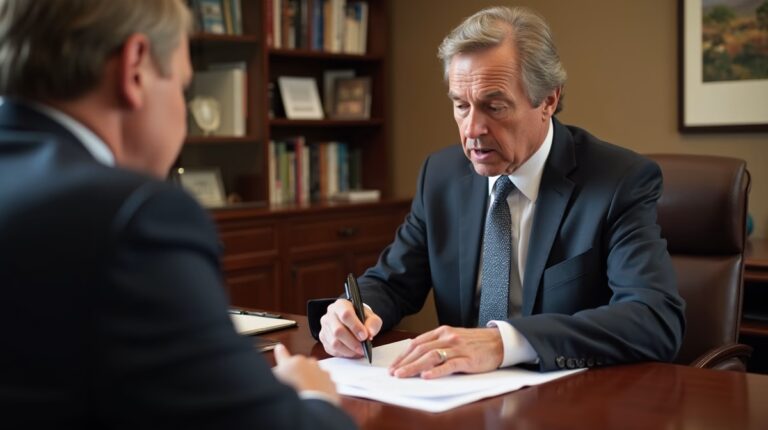
I recently had a client, Emily, who came to me absolutely distraught. Her father had meticulously crafted a trust to benefit her grandchildren, skipping a generation to minimize estate taxes. He’d passed away unexpectedly, and Emily discovered a critical flaw: the codicil updating beneficiary designations hadn’t been properly executed. It was a simple oversight – a missing witness signature – but it rendered the entire codicil invalid, potentially costing her family over $500,000 in unnecessary taxes and legal fees. This illustrates a fundamental truth about estate planning: even the most well-intentioned plans are only as strong as their execution.
A Generation-Skipping Transfer (GST) trust, when properly structured, is a powerful tool for preserving wealth and ensuring your wishes are honored for generations to come. However, preserving the original intent isn’t automatic. It requires proactive measures and a deep understanding of California’s complex trust laws. As an Estate Planning Attorney and CPA with over 35 years of experience, I’ve seen countless trusts unravel due to foreseeable – and often avoidable – pitfalls. The advantage of having a CPA on board is that we look at asset valuation and step-up in basis, crucial to avoiding capital gains headaches down the road.
What are the biggest threats to a GST Trust’s longevity?

Several factors can jeopardize a GST trust. One of the most significant is California’s strict adherence to the Uniform Statutory Rule Against Perpetuities (USRAP), which generally limits the trust’s lifespan to 90 years unless specific savings clauses are used. Unlike ‘dynasty friendly’ states like South Dakota, California doesn’t easily accommodate trusts designed to last indefinitely. This means that without careful drafting, your trust could terminate prematurely, forcing distributions and potentially negating the tax benefits you intended. Another frequent problem arises with property taxes. Under Prop 19, transferring a home to grandchildren via a GST Trust almost always triggers a property tax reassessment to current market value, as the ‘grandparent-grandchild’ exclusion is severely restricted compared to the old Prop 58 rules.
How can a trust be structured to avoid premature termination?
The key lies in incorporating “savings clauses” designed to extend the trust’s life. These clauses often involve defining future beneficiaries in a way that complies with USRAP. However, even with these clauses, it’s essential to periodically review the trust to ensure it remains aligned with your evolving family circumstances and the ever-changing tax landscape. Furthermore, trusts are legal documents dependent on physical items like a signed codicil. We advise clients to have backup documentation, and a clear list of physical locations where those documents can be found.
What happens if the settlor’s assets change after the trust is created?
This is a critical question. A trust is only effective with the assets it currently holds. If you acquire significant new assets after creating the trust, those assets will not be protected unless you specifically transfer them into the trust. This is particularly important with real estate. If you pass away owning a home intended for the GST trust but it remains in your name, AB 2016 (Probate Code § 13151) provides a potential solution for estates valued up to $750,000 through a ‘Petition for Succession’ (Judge’s Order), NOT an Affidavit. Remember, this is a Petition requiring court approval, not a simple administrative process. For deaths on or after April 1, 2025, this route provides a more streamlined method, but it’s still subject to legal scrutiny and fees.
What about digital assets and business interests held within the trust?
Digital assets represent a growing challenge. Without specific RUFADAA language (Probate Code § 870) in the GST Trust, service providers can legally block your trustee from accessing crypto wallets or cloud accounts intended for future generations. Similarly, if the trust holds interests in LLCs, it’s vital to be aware of the FinCEN 2025 Exemption. While domestic U.S. LLCs held in the trust are exempt from BOI reporting as of March 2025, trustees managing foreign-registered entities must still file updates with FinCEN within 30 days to avoid federal fines.
What about future tax law changes?
Tax laws are constantly evolving, and the GST tax exemption is no exception. Currently, the exemption is substantial, but it’s subject to change. Effective Jan 1, 2026, the OBBBA (One Big Beautiful Bill Act) permanently set the Federal Generation-Skipping Transfer (GST) Tax Exemption to $15 million per person; failing to allocate this exemption on Form 709 exposes the trust to a flat 40% tax on every distribution to grandchildren. Regular trust reviews with a qualified attorney and CPA are essential to ensure you’re taking advantage of current tax laws and making adjustments as needed. I stress to my clients that estate planning isn’t a one-time event; it’s an ongoing process.
What determines whether a California trust settlement remains private or erupts into public litigation?
Success in trust administration depends on more than just the document; it requires active management of assets, precise accounting to beneficiaries, and careful navigation of tax rules. Whether dealing with a blended family or complex real estate, understanding the mechanics of trust law is the only way to ensure the grantor’s wishes survive scrutiny.
| End Game | Consideration |
|---|---|
| Tax Impact | Address generation skipping trust. |
| Finality | Review common pitfalls. |
| Resolution | Finalize key participants. |
A stable trust administration relies on the trustee’s ability to balance investment duties, beneficiary communication, and tax compliance. When these elements are managed proactively, families can avoid the emotional and financial drain of litigation.
Verified Authority on California Generation-Skipping Trust (GST) Administration
-
GST Tax Exemption (OBBBA): IRS Estate & GST Tax Guidelines
Reflects the OBBBA update effective January 1, 2026, which sets the GST Tax Exemption at $15 million per person. Proper allocation of this exemption is the only way to shield trust assets from the flat 40% tax on distributions to grandchildren. -
Trust Duration Limits (USRAP): California Probate Code § 21205 (90-Year Rule)
California follows the Uniform Statutory Rule Against Perpetuities. This statute generally limits a Generation-Skipping Trust’s validity to 90 years, preventing “forever” trusts common in other jurisdictions. -
Property Tax Reassessment (Prop 19): California State Board of Equalization (Prop 19)
Critical for GST planning. Prop 19 severely limits the “grandparent-grandchild” exclusion, meaning most real estate transfers to grandchildren will trigger a property tax increase to current market value. -
Primary Residence Succession (AB 2016): California Probate Code § 13151 (Petition for Succession)
If a home intended for the GST trust was accidentally left out, this statute (effective April 1, 2025) allows a “Petition for Succession” for residences valued up to $750,000, avoiding a full probate. -
Digital Legacy (RUFADAA): California Probate Code § 870 (RUFADAA)
The authoritative statute for digital assets. Without specific RUFADAA provisions in the trust, multi-generational access to cryptocurrency and digital files can be legally denied by custodians. -
Business Compliance (FinCEN): FinCEN – Beneficial Ownership Information (BOI)
As of March 2025, domestic U.S. LLCs are exempt from mandatory BOI reporting. However, trustees managing foreign-registered entities must still comply with strict reporting windows to avoid penalties of $500/day.
|
Attorney Advertising, Legal Disclosure & Authorship
ATTORNEY ADVERTISING.
This content is provided for general informational and educational purposes only and does not constitute legal, financial, or tax advice. Under the California Rules of Professional Conduct and State Bar advertising regulations, this material may be considered attorney advertising. Reading this content does not create an attorney-client relationship or any professional advisory relationship. Laws vary by jurisdiction and are subject to change, including recent 2026 developments under California’s AB 2016 and evolving federal estate and reporting requirements. You should consult a qualified attorney or advisor regarding your specific circumstances before taking action.
Responsible Attorney:
Steven F. Bliss, California Attorney (Bar No. 147856).
Local Office:
Corona Probate Law765 N Main St 124 Corona, CA 92878 (951) 582-3800
Corona Probate Law is a practice location and trade name used by Steven F. Bliss, Esq., a California-licensed attorney.
About the Author & Legal Review Process
This article was researched and drafted by the Legal Editorial Team of the Law Firm of Steven F. Bliss, Esq.,
a collective of attorneys, legal writers, and paralegals dedicated to translating complex legal concepts into clear, accurate guidance.
Legal Review:
This content was reviewed and approved by Steven F. Bliss, a California-licensed attorney (Bar No. 147856). Mr. Bliss concentrates his practice in estate planning and estate administration, advising clients on proactive planning strategies and representing fiduciaries in probate and trust administration proceedings when formal court involvement becomes necessary.
With more than 35 years of experience in California estate planning and estate administration,
Mr. Bliss focuses on structuring enforceable estate plans, guiding fiduciaries through court-supervised proceedings, resolving creditor and notice issues, and coordinating asset management to support compliant, timely distributions and reduce fiduciary risk. |