
Legal & Tax Disclosure
ATTORNEY ADVERTISING. This article is provided for general informational purposes only and does not constitute legal, financial, or tax advice. Reading this content does not create an attorney-client or professional advisory relationship. Laws vary by jurisdiction and are subject to change. You should consult a qualified professional regarding your specific circumstances. |
It started with a misplaced codicil. Emily had meticulously updated her estate plan, adding her new grandson as a beneficiary. But the original Will – the one directing where everything went before the codicil – was never located. The bank refused to honor the codicil without the original Will for comparison, leaving Emily’s wishes in legal limbo and her family facing a costly and protracted probate. This situation, unfortunately, is more common than you might think, and underscores the critical need for proper trust administration, even when contemplating dissolution.
As an estate planning attorney and CPA with over 35 years of experience, I’ve seen firsthand how easily even carefully crafted trusts can become sources of frustration and expense if not managed proactively. Many clients believe that simply establishing a trust is the end of the process; however, ongoing maintenance and the eventual dissolution of the trust are equally important. The good news is that dissolving a living trust is generally straightforward, but it requires careful attention to detail to avoid unintended consequences.
What Does Dissolving a Trust Actually Mean?
Technically, a revocable living trust doesn’t “dissolve” in the same way a corporation dissolves. Instead, it’s terminated, and its assets are distributed to the beneficiaries named in the trust document. The process usually occurs after the grantor (the person who created the trust) passes away, but a grantor can also choose to terminate a revocable trust during their lifetime if circumstances change and the trust is no longer needed. This could be due to a change in assets, marital status, or beneficiary designations.
Steps to Terminate a Living Trust
The termination process is outlined in the trust document itself. It typically involves these key steps:
- Inventory of Assets: The trustee (the person responsible for managing the trust) must create a complete inventory of all assets held in the trust. This includes real estate, bank accounts, investments, and personal property.
- Notice to Beneficiaries: All beneficiaries must be formally notified of the trust’s termination. This notice should include a detailed accounting of the assets and the proposed distribution plan.
- Distribution of Assets: The trustee distributes the assets to the beneficiaries according to the terms of the trust. This may involve transferring ownership of property, writing checks, or selling assets and distributing the proceeds.
- Final Accounting: After all assets have been distributed, the trustee prepares a final accounting, documenting all income and expenses related to the trust.
- Execution of a Termination Certificate: A termination certificate is signed by the trustee, confirming that the trust has been fully terminated and all assets have been distributed.
The CPA Advantage: Step-Up in Basis and Capital Gains
As a CPA, I understand the significant tax implications associated with trust termination. One of the primary benefits of a revocable living trust is the potential for a “step-up in basis” for inherited assets. Upon the grantor’s death, the beneficiaries receive the assets with a new cost basis equal to their fair market value on the date of death. This can substantially reduce capital gains taxes when the beneficiaries eventually sell those assets. Proper valuation is crucial here; an under-valuation can lead to penalties and interest from the IRS.
What Happens If I Fail to Properly Terminate the Trust?
If a trust is not properly terminated, it can remain open indefinitely, potentially leading to complications and increased administrative costs. For example, if a Will is invalidated, assets fall under intestacy; however, for deaths on or after April 1, 2025, estates with personal property under $208,850 (per CPC § 13100) may still bypass full probate via affidavit. Additionally, failing to follow the proper procedures can create legal challenges from beneficiaries, resulting in costly litigation.
The Impact of Beneficiary Witnesses
It’s also important to be aware of the potential issues surrounding beneficiary witnesses. In California, California Probate Code § 6112 dictates that an ‘interested witness’ (a beneficiary) triggers a legal presumption of duress or fraud. Unless there are two other disinterested witnesses, the beneficiary may lose their gift, taking only what they would have received under intestacy rules. This is particularly relevant when considering who should witness the termination certificate.
Addressing Errors in Execution
Sometimes, mistakes happen during the execution of trust documents, even during termination. While not ideal, these errors aren’t always fatal. Probate Code § 6110(c)(2) (Harmless Error) states that the court may validate a signature-defective Will if there is ‘clear and convincing evidence’ of the testator’s intent; however, this requires a costly court petition and is not a guaranteed safety net.
Self-Proving Affidavits: Streamlining the Process
To avoid potential challenges and delays, I always recommend including a self-proving affidavit with your trust document. Probate Code § 8220 explains that including a self-proving affidavit allows the Will to be admitted to probate without the testimony of the subscribing witnesses, significantly accelerating the court’s approval process.
Digital Assets and RUFADAA 2.0
Finally, don’t overlook the importance of addressing digital assets in your trust. RUFADAA 2.0 (SB 1458), effective 2025, California law (CPC § 871) was expanded to grant fiduciaries power over digital accounts; however, you must still grant explicit RUFADAA powers in your Will or Trust to bypass federal privacy blocks.
Understanding this specific rule is helpful, but it is ultimately the strength of your underlying Will that protects your legacy.
In my Temecula practice, I frequently see “perfect” asset plans unravel because the base estate documents could not survive a court challenge.
Understanding the following standards is critical to ensuring your wishes are honored in probate court:
What makes a California will legally enforceable when it matters most?
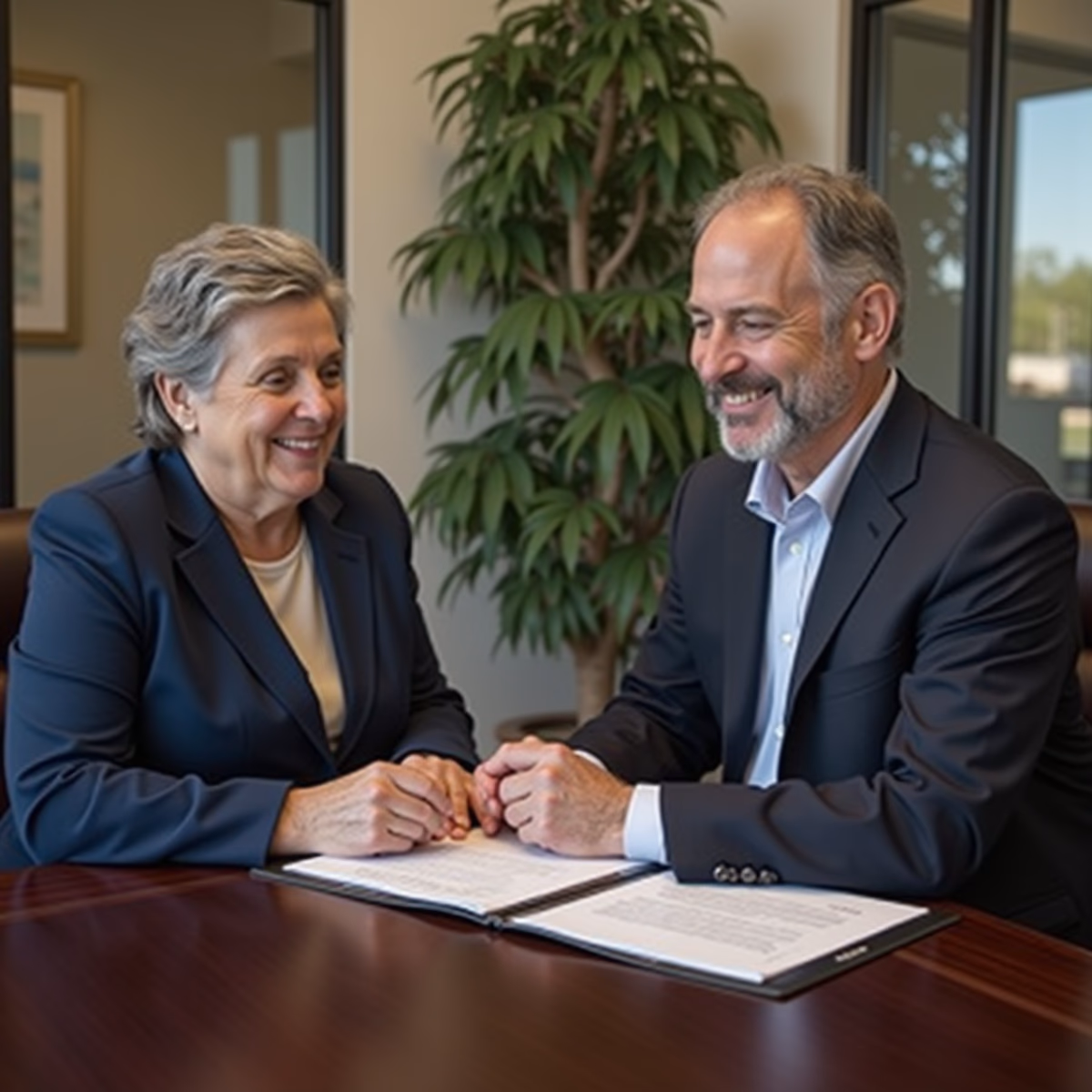
In California, a last will and testament is reviewed under probate standards that focus on intent, capacity, and execution. Clear drafting reduces ambiguity, limits misinterpretation, and helps families avoid unnecessary conflict during estate administration.
- Authority: Define executor responsibilities clearly.
- Guardians: Establish guardian nominations for minors.
- Jurisdiction: Confirm domicile requirements.
When a will is drafted with California probate review in mind, it becomes a stabilizing roadmap rather than a source of conflict. Clear intent, proper authority, and compliant execution protect both families and estates.
Resources for Legal Standards & Probate Procedure
-
Riverside Local Rules: Riverside Superior Court – Probate Division
Access the essential “Local Rules” (Title 7) effective January 1, 2026. This includes mandatory e-filing procedures, current Probate Examiner notes, and specific requirements for remote appearances via the court’s designated platform for non-evidentiary hearings. -
Attorney Verification: State Bar of California
The official regulatory body for California attorneys. Use this to verify a lawyer’s “Certified Specialist” status in Estate Planning or to access 2026 guidelines on the ethical handling of Client Trust Accounts (IOLTA). -
Self-Help & Forms: California Courts – Wills, Estates, and Probate
The Judicial Council’s official portal. It includes the updated 2026 forms for the $208,850 personal property threshold and the $750,000 “Primary Residence” simplified transfer procedure (AB 2016). -
Federal Estate Tax: IRS Estate Tax Guidelines
The authoritative federal resource for estate and gift tax filing. It reflects the 2026 “OBBBA” permanent exemption of $15 million per individual, replacing the previously scheduled Tax Cuts and Jobs Act (TCJA) sunset.
Attorney Advertising, Legal Disclosure & Authorship
ATTORNEY ADVERTISING. This content is provided for general informational and educational purposes only and does not constitute legal, financial, or tax advice. Under the California Rules of Professional Conduct and State Bar advertising regulations, this material may be considered attorney advertising. Reading this content does not create an attorney-client relationship or any professional advisory relationship. Laws vary by jurisdiction and are subject to change, including recent 2026 developments under California’s AB 2016 and evolving federal estate and reporting requirements. You should consult a qualified attorney or advisor regarding your specific circumstances before taking action.
Responsible Attorney: Steven F. Bliss, California Attorney (Bar No. 147856).
Local Office:
Corona Probate Law765 N Main St 124 Corona, CA 92878 (951) 582-3800
Corona Probate Law is a practice location and trade name used by Steven F. Bliss, Esq., a California-licensed attorney.
About the Author & Legal Review Process
This article was researched and drafted by the Legal Editorial Team of the Law Firm of Steven F. Bliss, Esq., a collective of attorneys, legal writers, and paralegals dedicated to translating complex legal concepts into clear, accurate guidance.
Legal Review: This content was reviewed and approved by Steven F. Bliss, a California-licensed attorney (Bar No. 147856). Mr. Bliss concentrates his practice in estate planning and estate administration, advising clients on proactive planning strategies and representing fiduciaries in probate and trust administration proceedings when formal court involvement becomes necessary.
With more than 35 years of experience in California estate planning and estate administration, Mr. Bliss focuses on structuring enforceable estate plans, guiding fiduciaries through court-supervised proceedings, resolving creditor and notice issues, and coordinating asset management to support compliant, timely distributions and reduce fiduciary risk. |