
Legal & Tax Disclosure
ATTORNEY ADVERTISING. This article is provided for general informational purposes only and does not constitute legal, financial, or tax advice. Reading this content does not create an attorney-client or professional advisory relationship. Laws vary by jurisdiction and are subject to change. You should consult a qualified professional regarding your specific circumstances. |
Emily just received the devastating news: her mother, after a series of small strokes, has been declared legally incapacitated. But the real shock wasn’t the diagnosis itself – it was the discovery of a decades-old, poorly drafted codicil attempting to name Emily as guardian. The document was riddled with errors, lacked proper witnesses as required by California law, and was ultimately rejected by the probate court. Now, Emily faces a costly and stressful conservatorship battle with a distant cousin, potentially losing control of her mother’s care and finances – a legal fight easily exceeding $50,000.
As an Estate Planning Attorney and CPA with over 35 years of experience here in Corona, California, I see scenarios like Emily’s far too often. People believe a simple codicil is enough to safeguard their wishes, but the legal landscape is nuanced. It’s not just what you want to happen, it’s how you legally ensure it does. A failed or contested guardianship can quickly erode a family’s resources, both emotionally and financially.
What Happens if I Lose Capacity Without a Plan?
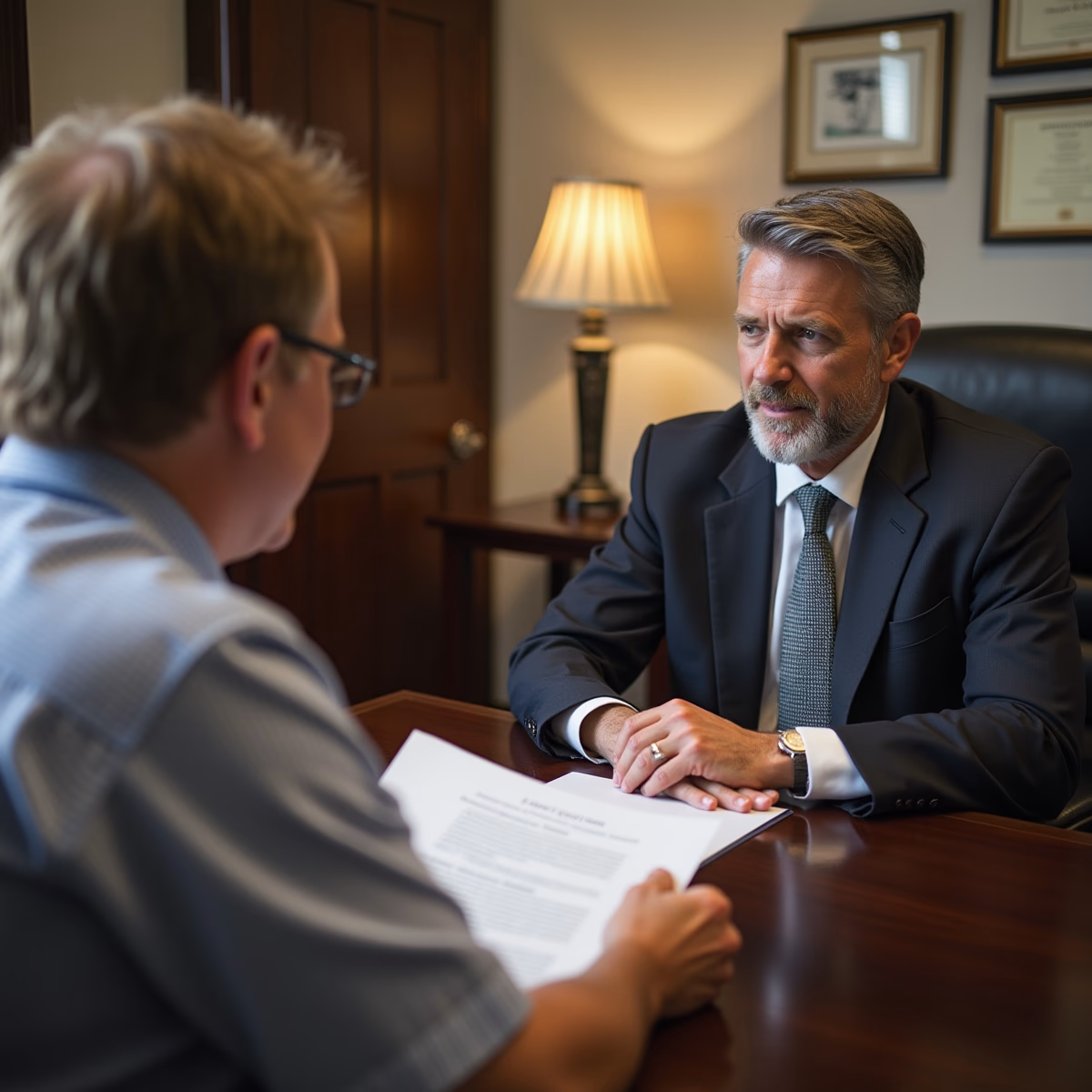
Without valid advance healthcare directives and a properly executed Durable Power of Attorney, the court will appoint a guardian and conservator. This isn’t a swift process. A petition must be filed with the Superior Court, notice provided to family members, and a hearing scheduled. The court prioritizes the best interests of the incapacitated person, not necessarily your preferred choice. Family disagreements can easily escalate, creating a deeply divisive situation. The court may appoint a professional fiduciary if it determines no family member is suitable or willing to serve. These professionals, while qualified, come with ongoing fees that significantly reduce the estate’s assets.
How Does a Durable Power of Attorney Help?
A Durable Power of Attorney (DPOA) is a powerful document that allows you to appoint someone – your “agent” – to manage your finances and property if you become incapacitated. Importantly, the DPOA remains effective even after you lose capacity, unlike a standard Power of Attorney which terminates upon incapacitation. The agent can pay bills, manage investments, handle real estate transactions, and generally act on your behalf. Selecting a trustworthy agent is paramount. Under the Independent Administration of Estates Act (IAEA), a DPOA that grants “Full Authority” provides your agent significant power to act without court intervention, streamlining financial management and avoiding delays. Conversely, a “Limited Authority” DPOA requires court confirmation for most transactions, adding complexity and cost.
What About Healthcare Decisions?
A DPOA addresses finances; an Advance Healthcare Directive addresses healthcare. This includes two key documents: a Durable Power of Attorney for Healthcare (allowing someone to make medical decisions on your behalf) and a Living Will (outlining your wishes regarding life-sustaining treatment). These documents ensure your healthcare preferences are honored, even if you cannot communicate them yourself. While FERPA (Family Educational Rights and Privacy Act) typically protects student records, exceptions exist for a designated healthcare agent making decisions on behalf of a minor.
What Role Does a CPA Play in Incapacity Planning?
As a CPA, I bring a unique perspective to incapacity planning. Beyond simply appointing an agent, we must consider the tax implications of their actions. For example, understanding the OBBBA (One Big Beautiful Bill Act) and the current $15 million Federal Estate Tax Exemption (effective January 1, 2026) is crucial for minimizing potential estate taxes. Furthermore, accurate valuation of assets – particularly real estate and business interests – is essential for proper administration. A “step-up in basis” at death can significantly reduce capital gains taxes for your heirs, and proactive tax planning is a key component of a comprehensive incapacity plan.
What About Digital Assets?
In today’s world, digital assets – online accounts, cryptocurrency, and digital photos – are often significant parts of an estate. California’s RUFADAA (Revised Uniform Fiduciary Access to Digital Assets Act) provides a framework for accessing and managing these assets, but only if you provide clear “written direction” in your Will, Trust, or through an online tool like Google’s Inactive Account Manager. Without this direction, accessing these assets can be incredibly difficult, potentially leading to loss of funds or sentimental items.
What if My Estate Is Below the Probate Threshold?
Even if your estate is below the California Probate Threshold of $208,850 (updated effective April 1, 2025, and fixed until April 1, 2028), a well-structured incapacity plan is vital. While probate may not be necessary upon your death, the absence of a DPOA and Advance Healthcare Directive will still necessitate court intervention if you become incapacitated, leading to unnecessary expense and stress for your loved ones.
Strategic planning for this specific asset is important, but it must be supported by a Will that can withstand California judicial review.
In my Temecula practice, I frequently see “perfect” asset plans unravel because the base estate documents could not survive a court challenge.
Understanding the following standards is critical to ensuring your wishes are honored in probate court:
What makes a California will legally enforceable when it matters most?
In California, a last will and testament operates within a probate system that emphasizes intent, clarity, and procedural compliance. When properly drafted, a will does more than distribute property—it creates legally enforceable instructions that guide courts, fiduciaries, and beneficiaries through administration with fewer disputes and less uncertainty.
To create a valid document, you must ensure the signer has legal capacity, strictly follow California will rules, and ensure you are correctly identifying the will maker to prevent identity disputes.
For California residents, understanding how intent, authority, and compliance interact is one of the most effective ways to protect family harmony and estate integrity. A will that anticipates probate scrutiny is far more likely to be honored as written and far less likely to become the source of unnecessary conflict.
Official Legal Mandates and Resources for California Guardianship
-
Mandatory Judicial Forms:
Judicial Council of California – Guardianship Forms (GC Series)
Access the complete library of “GC” (Guardianship and Conservatorship) forms required for filing a petition in California. In 2026, this remains the official source for mandatory background screening forms and the specific notices required for relatives under the Probate Code. -
Self-Help Procedural Guide:
California Courts – Guardianship Self-Help
An official judicial resource providing step-by-step instructions for families seeking legal custody. This guide explains the critical 2026 distinctions between Guardianship of the Person (physical care and health) and Guardianship of the Estate (financial management of the minor’s assets). -
Acknowledgment of Fiduciary Duties:
Duties of Guardian (Form GC-248)
The mandatory Judicial Council document that every prospective guardian must sign. It acknowledges your legal obligations regarding the minor’s education, health, and welfare, and establishes your ongoing accountability to the California Probate Court. -
Statutory Authority:
California Probate Code § 1500 (Guardianship)
The definitive statutory authority governing the appointment of guardians. This code stipulates that a parent or third party can only be appointed if it is proven—under the “Clear and Convincing” evidence standard—that parental custody would be detrimental to the child’s best interests.
Attorney Advertising, Legal Disclosure & Authorship
ATTORNEY ADVERTISING. This content is provided for general informational and educational purposes only and does not constitute legal, financial, or tax advice. Under the California Rules of Professional Conduct and State Bar advertising regulations, this material may be considered attorney advertising. Reading this content does not create an attorney-client relationship or any professional advisory relationship. Laws vary by jurisdiction and are subject to change, including recent 2026 developments under California’s AB 2016 and evolving federal estate and reporting requirements. You should consult a qualified attorney or advisor regarding your specific circumstances before taking action.
Responsible Attorney: Steven F. Bliss, California Attorney (Bar No. 147856).
Local Office:
Corona Probate Law765 N Main St 124 Corona, CA 92878 (951) 582-3800
Corona Probate Law is a practice location and trade name used by Steven F. Bliss, Esq., a California-licensed attorney.
About the Author & Legal Review Process
This article was researched and drafted by the Legal Editorial Team of the Law Firm of Steven F. Bliss, Esq., a collective of attorneys, legal writers, and paralegals dedicated to translating complex legal concepts into clear, accurate guidance.
Legal Review: This content was reviewed and approved by Steven F. Bliss, a California-licensed attorney (Bar No. 147856). Mr. Bliss concentrates his practice in estate planning and estate administration, advising clients on proactive planning strategies and representing fiduciaries in probate and trust administration proceedings when formal court involvement becomes necessary.
With more than 35 years of experience in California estate planning and estate administration, Mr. Bliss focuses on structuring enforceable estate plans, guiding fiduciaries through court-supervised proceedings, resolving creditor and notice issues, and coordinating asset management to support compliant, timely distributions and reduce fiduciary risk. |