|
Legal & Tax Disclosure
ATTORNEY ADVERTISING.
This article is provided for general informational purposes only and does not constitute legal, financial, or tax advice. Reading this content does not create an attorney-client or professional advisory relationship. Laws vary by jurisdiction and are subject to change. You should consult a qualified professional regarding your specific circumstances. |
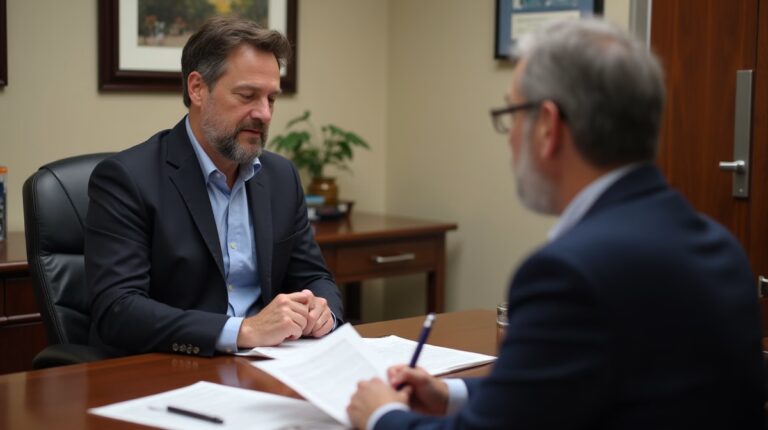
I recently spoke with Keith, and his situation was a perfect example of why proactive estate planning is essential. He waited six months after his mother’s passing to address the property transfer, assuming it would be straightforward. It wasn’t. Because he missed the one-year window to move into the property, he faced a significant property tax reassessment – a painful surprise costing him over $12,000 annually. He’d heard about Proposition 19, but didn’t fully understand the strict requirements and time constraints. That’s a common story, and one I see play out far too often after 35+ years as an Estate Planning Attorney and CPA.
What Happens to Property Taxes When Someone Dies in California?

California’s Proposition 19, approved by voters in 2020, impacts how property tax bases are transferred upon death. The goal was to create a more equitable system, but it has introduced complexities that clients frequently misinterpret. Essentially, it allows a parent’s property tax base to transfer to their children, but with crucial stipulations. It’s not automatic, and there’s a tight deadline. Specifically, under Proposition 19, heirs only keep a parent’s low property tax base if they move into the home as their primary residence within one year. Critically, for 2026, the tax-free ‘basis boost’ is capped at $1,044,586 over the original taxable value; any value exceeding this adjusted cap results in a partial reassessment even if the child moves in. This means a seemingly straightforward inheritance can quickly become a substantial tax burden if not handled correctly.
What Forms Do I Need to File with Prop 19?
The primary form is the “Claim to Exclude Transfer from Reassessment” (BOE-58-A). This must be filed within 90 days of the death, and as Keith learned, the one-year occupancy requirement begins from the date of death, not the date the form is filed. It’s incredibly important to adhere to this timeline. Filing the form initiates the process, but it doesn’t guarantee a full exclusion. The county assessor will then evaluate the claim and determine the extent of the property tax reassessment, considering the value cap. There’s also a secondary form, BOE-58-B, for reporting the transfer, but the BOE-58-A is the crucial one for maintaining the low tax base.
How Does a CPA Help with Prop 19 and Estate Taxes?
As a CPA as well as an attorney, I bring a unique advantage to these situations. Understanding the interplay between property tax, estate taxes, and cost basis is vital. For example, the property’s “stepped-up” cost basis at the time of death can significantly impact capital gains taxes if the property is later sold. Failing to account for this, or improperly valuing the property, can lead to unforeseen tax liabilities. Furthermore, the One Big Beautiful Bill Act (OBBBA) permanently established the Federal Estate Tax Exemption at $15 million per person ($30 million for couples) effective Jan 1, 2026. This eliminates the ‘2026 Sunset’ fear, though the top tax rate remains at 40% for assets exceeding this permanent threshold, which is now indexed annually for inflation. My dual expertise allows me to minimize overall tax exposure, ensuring my clients retain the maximum value of their estate.
What Happens if I Miss the Prop 19 Filing Deadline?
Missing the 90-day filing deadline for the BOE-58-A is a serious problem. While it’s possible to request an extension under certain limited circumstances, the assessor is not obligated to grant it. If no form is filed, or the deadline is missed, the property will be automatically reassessed to its current market value, resulting in a potentially substantial increase in property taxes. This is what happened to Keith. He thought a few months wouldn’t matter, but the increased tax bill quickly proved him wrong. It’s a mistake that could have been avoided with proper planning. And with the increasing complexity of these regulations, professional guidance is often the best, and most cost-effective, solution.
While addressing this specific concern is vital, your entire estate plan relies on the enforceability of your Last Will and Testament.
As a dual-licensed CPA and Attorney, I warn clients that specific asset strategies are useless if the core Will fails to meet probate standards.
Understanding the following standards is critical to ensuring your wishes are honored in probate court:
How do California courts decide whether a will reflects true intent or creates ambiguity?
In California, a last will and testament is reviewed under probate standards that focus on intent, capacity, and execution. Clear drafting reduces ambiguity, limits misinterpretation, and helps families avoid unnecessary conflict during estate administration.
- Authority: Define executor responsibilities clearly.
- Protection: Establish guardianship for minors.
- Jurisdiction: Confirm domicile requirements.
When a will is drafted with California probate review in mind, it becomes a stabilizing roadmap rather than a source of conflict. Clear intent, proper authority, and compliant execution protect both families and estates.
Controlling Legal Standards Governing California Estate and Asset Transfers
-
Probate & Court Procedure:
California Courts – Wills, Estates, and Probate
The official judicial branch guide for navigating the probate process; it provides updated 2026 checklists for determining if an estate qualifies for “Summary Probate” under the $208,850 personal property limit or the $750,000 primary residence threshold (AB 2016). -
Property Tax Reassessment (Prop 19):
California State Board of Equalization (Prop 19)
The definitive resource for understanding the “Parent-to-Child” reassessment exclusion; it outlines the strict one-year deadline for heirs to move into an inherited home as their primary residence to maintain the parent’s low property tax base. -
Advance Healthcare Planning:
California Attorney General – Advance Health Care Directive
Provides the official California statutory form and legal guidelines for appointing a health care agent; this resource emphasizes the necessity of combining a medical power of attorney with a HIPAA release to ensure doctors can communicate with family during an emergency. -
Federal Estate & Gift Tax:
IRS Estate Tax Guidelines
The authoritative federal portal for estate and gift tax reporting; this page reflects the 2026 “OBBBA” permanent exemption of $15 million per person, effectively replacing the previously scheduled Tax Cuts and Jobs Act (TCJA) sunset. -
Digital Asset Access (RUFADAA):
California RUFADAA Law (Probate Code §§ 870-884)
Access the full statutory text of the Revised Uniform Fiduciary Access to Digital Assets Act; it explains why executors are legally barred from accessing encrypted accounts, email, or crypto-wallets unless the decedent provided explicit “prior consent” in their estate plan.
|
Attorney Advertising, Legal Disclosure & Authorship
ATTORNEY ADVERTISING.
This content is provided for general informational and educational purposes only and does not constitute legal, financial, or tax advice. Under the California Rules of Professional Conduct and State Bar advertising regulations, this material may be considered attorney advertising. Reading this content does not create an attorney-client relationship or any professional advisory relationship. Laws vary by jurisdiction and are subject to change, including recent 2026 developments under California’s AB 2016 and evolving federal estate and reporting requirements. You should consult a qualified attorney or advisor regarding your specific circumstances before taking action.
Responsible Attorney:
Steven F. Bliss, California Attorney (Bar No. 147856).
Local Office:
Corona Probate Law765 N Main St 124 Corona, CA 92878 (951) 582-3800
Corona Probate Law is a practice location and trade name used by Steven F. Bliss, Esq., a California-licensed attorney.
About the Author & Legal Review Process
This article was researched and drafted by the Legal Editorial Team of the Law Firm of Steven F. Bliss, Esq.,
a collective of attorneys, legal writers, and paralegals dedicated to translating complex legal concepts into clear, accurate guidance.
Legal Review:
This content was reviewed and approved by Steven F. Bliss, a California-licensed attorney (Bar No. 147856). Mr. Bliss concentrates his practice in estate planning and estate administration, advising clients on proactive planning strategies and representing fiduciaries in probate and trust administration proceedings when formal court involvement becomes necessary.
With more than 35 years of experience in California estate planning and estate administration,
Mr. Bliss focuses on structuring enforceable estate plans, guiding fiduciaries through court-supervised proceedings, resolving creditor and notice issues, and coordinating asset management to support compliant, timely distributions and reduce fiduciary risk. |