This article is provided for general informational purposes only and does not constitute legal, financial, or tax advice.
Reading this content does not create an attorney-client or professional advisory relationship.
Laws vary by jurisdiction and are subject to change. You should consult a qualified professional regarding your specific circumstances.
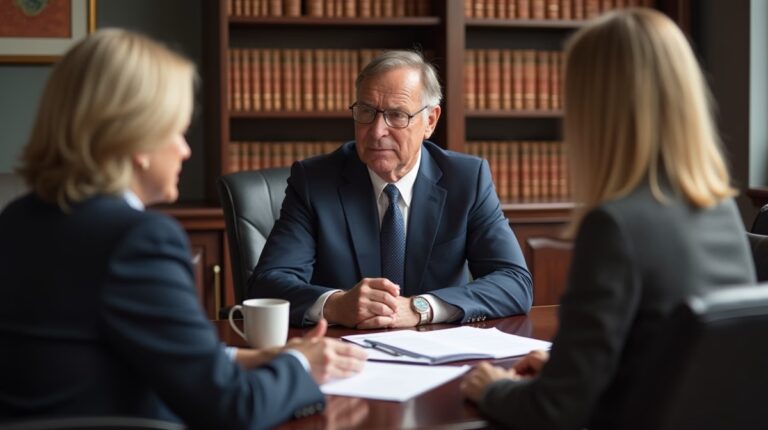
Emily received a phone call no one wants to get. Her husband, David, unexpectedly passed away. She believed they had a simple estate plan—a Will signed years ago, naming her as everything. But David, a bit of a packrat, had also written a handwritten note shortly before his death, changing his mind about who should manage things. It wasn’t a proper codicil, just a few sentences on a scrap of paper. Emily presented this to me, hoping it would be honored. Unfortunately, the law is very specific. A hastily scribbled note, however heartfelt, doesn’t meet the legal requirements to alter a valid Will. The cost of this oversight? A potential fight with David’s adult children from a previous marriage, and a significantly delayed and expensive probate process.
As an Estate Planning Attorney and CPA with over 35 years of experience here in Corona, California, I’ve seen this scenario play out countless times. It highlights a crucial point: a technically flawed amendment is worse than no amendment at all. It creates ambiguity and invites litigation. My CPA background gives me a unique advantage; I not only ensure legal compliance but also maximize the tax benefits for your heirs—like securing that critical step-up in basis for inherited assets, minimizing capital gains, and performing accurate valuations.
Who Gets to be Executor? (The Fight)
A frequent source of conflict arises when determining who will serve as the Executor of the estate. Often, family members disagree, or a loved one feels entitled to the position. It’s important to understand that the Will nominates an Executor, but the Court makes the final appointment. Probate Code § 8461 dictates a strict Order of Priority if there is no Will (Intestacy): (1) Surviving Spouse, (2) Children, (3) Grandchildren, (4) Parents, (5) Siblings. A friend or unmarried partner has zero priority unless specifically named in a Will. Even if named in the Will, a beneficiary with a conflict of interest—say, a disgruntled child—can petition the Court to remove the nominated Executor and appoint themselves or another party. This can lead to protracted legal battles and drain the estate’s assets.
What Happens if There’s No Will at All?
Many people delay creating a Will, thinking their assets will automatically pass to their spouse. While this is often true for community property, it’s not a guarantee, particularly for separate property or assets held in retirement accounts. Without a Will, California’s intestate succession laws take over. This means the state dictates how your assets are distributed, potentially leaving your spouse with less than you intended and forcing your children to share assets in ways you wouldn’t have chosen.
What About the Original Will? (The “30-Day Rule”)
One of the most common mistakes I encounter involves the handling of the original Will. The person holding the decedent’s original Will has a mandatory legal duty to file it with the Court Clerk within 30 days of learning of the death. Probate Code § 8200 states this clearly. Failure to do so can make the custodian liable for all damages caused by the delay. This isn’t just a formality; a late filing can raise suspicions, create opportunities for challenges, and significantly complicate the probate process.
Does Probate Always Have to Happen? (The Probate Threshold)
Not necessarily. California has a threshold for when probate is required. Filing a Petition for Probate (Form DE-111) is mandatory if the decedent’s gross estate value exceeds $208,850 (effective April 1, 2025). Below this amount, successors should use the Section 13100 Small Estate Affidavit or AB 2016 Petition for Succession instead. These streamlined procedures are far less expensive and time-consuming than full probate. However, even if the estate falls below the threshold, probate may still be necessary if there are complex issues, such as disputes among heirs or questions about the validity of the Will.
What if the Will Requires a Bond? (Insurance)
Often, Wills include a provision waiving the requirement for the Executor to post a bond—a type of insurance policy protecting the estate from potential mismanagement. However, the Court isn’t bound by this waiver. Probate Code § 8481 distinguishes between Waiver vs. Requirement. Even if the Will waives bond, the Court may still require it if the executor lives out of state. Conversely, if there is no Will, bond is required unless all beneficiaries sign a waiver. The bond amount is based on the value of personal property plus annual income.
What if the Original Will is Lost? (Copy Only)
This is a surprisingly frequent problem. If the original Will is missing, you cannot simply attach a copy to the petition. Probate Code § 8223 requires a specific procedure. You must check the ‘Lost Will’ box and file a separate declaration proving the Will was not revoked and establishing its contents through witness testimony. This can be challenging, as you need reliable witnesses who can accurately recall the terms of the Will.
What failures trigger contested proceedings and court intervention in California probate administration?

California probate is designed to provide court-supervised transfer of property, yet cases often break down when authority is unclear, required steps are missed, or disputes arise over assets, notice, and fiduciary conduct. When the process is misunderstood, families can face avoidable delay, escalating conflict, and increased exposure to creditor issues, hearings, or litigation before the estate can close.
- Court Battles: Prepare for litigating probate disputes if agreement fails.
- Document Challenges: Understand the grounds for contesting a will.
- Cross-Over: Navigate complex probate and trust disputes.
A stable probate administration outcome usually follows from clarity, consistency, and readiness for court review, especially when multiple stakeholders and competing interpretations are involved. When documentation supports enforcement and timelines are respected, families are less likely to face preventable escalation.
Verified Authority on the Petition for Probate
-
The Petition (Form DE-111): California Probate Code § 8000 (Grounds for Filing)
This is the document that starts it all. Under Section 8000, any interested person may file this petition to request the court admit a will to probate and appoint a personal representative. Without this filing, the court has no jurisdiction to act. -
Duty to File the Will: California Probate Code § 8200 (Custodian Duty)
Holding onto the original Will is a liability. The law requires the custodian to deliver the Will to the Superior Court Clerk within 30 days of the death. Hiding or destroying a Will to prevent probate is a serious legal violation. -
Priority for Appointment: California Probate Code § 8461 (Intestacy Hierarchy)
When there is no Will, the court does not choose the “best” person; it follows a rigid statutory list. The Surviving Spouse has top priority, followed by children, then grandchildren. Understanding this hierarchy helps predict who will win a contested appointment. -
Probate Bond Requirements: California Probate Code § 8482 (Bond Amount)
The bond acts as an insurance policy to protect beneficiaries from a dishonest executor. The petition must state the estimated value of the estate so the judge can set the bond amount—typically the value of personal property plus one year’s estimated income. -
Independent Administration (IAEA): California Probate Code § 10400
The box you check here matters. Requesting “Full Authority” under the IAEA allows the executor to manage the estate efficiently (e.g., selling a house) without constant court hearings. Requesting “Limited Authority” forces the estate into a slower, court-supervised process. -
Proving a Lost Will: California Probate Code § 8223
If the original Will cannot be found, the law presumes the decedent destroyed it with the intent to revoke it. To overcome this presumption, the petitioner must provide clear and convincing evidence that the Will was merely lost, not revoked.
|
Attorney Advertising, Legal Disclosure & Authorship
ATTORNEY ADVERTISING.
This content is provided for general informational and educational purposes only and does not constitute legal, financial, or tax advice. Under the California Rules of Professional Conduct and State Bar advertising regulations, this material may be considered attorney advertising. Reading this content does not create an attorney-client relationship or any professional advisory relationship. Laws vary by jurisdiction and are subject to change, including recent 2026 developments under California’s AB 2016 and evolving federal estate and reporting requirements. You should consult a qualified attorney or advisor regarding your specific circumstances before taking action.
Responsible Attorney:
Steven F. Bliss, California Attorney (Bar No. 147856).
Local Office:
Corona Probate Law765 N Main St 124 Corona, CA 92878 (951) 582-3800
Corona Probate Law is a practice location and trade name used by Steven F. Bliss, Esq., a California-licensed attorney.
About the Author & Legal Review Process
This article was researched and drafted by the Legal Editorial Team of the Law Firm of Steven F. Bliss, Esq.,
a collective of attorneys, legal writers, and paralegals dedicated to translating complex legal concepts into clear, accurate guidance.
Legal Review:
This content was reviewed and approved by Steven F. Bliss, a California-licensed attorney (Bar No. 147856). Mr. Bliss concentrates his practice in estate planning and estate administration, advising clients on proactive planning strategies and representing fiduciaries in probate and trust administration proceedings when formal court involvement becomes necessary.
With more than 35 years of experience in California estate planning and estate administration,
Mr. Bliss focuses on structuring enforceable estate plans, guiding fiduciaries through court-supervised proceedings, resolving creditor and notice issues, and coordinating asset management to support compliant, timely distributions and reduce fiduciary risk. |