|
Legal & Tax Disclosure
ATTORNEY ADVERTISING.
This article is provided for general informational purposes only and does not constitute legal, financial, or tax advice. Reading this content does not create an attorney-client or professional advisory relationship. Laws vary by jurisdiction and are subject to change. You should consult a qualified professional regarding your specific circumstances. |
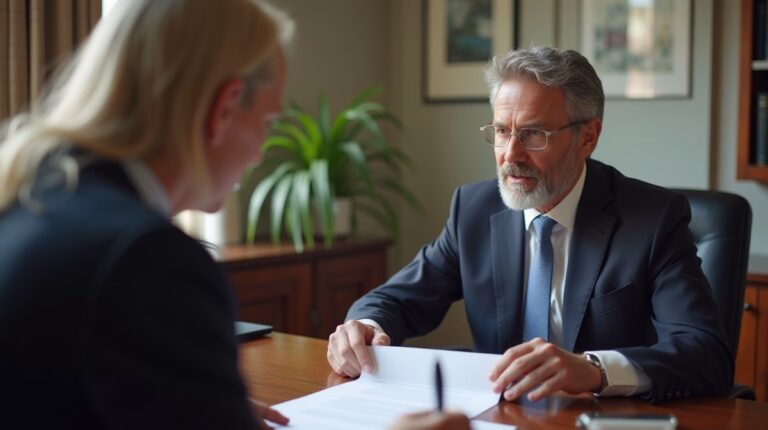
Larry received a call last week—a probate attorney informing him his aunt had passed, and, crucially, named him as Executor in her Will. Larry was shocked. He hadn’t spoken to his aunt in years and has absolutely no idea what an Executor even does. He’s now facing potential legal headaches and a mountain of paperwork. The cost of refusing could be significant: strained family relationships, accusations of disrespect, and even legal challenges if the court deems the Will invalid due to a lack of a qualified Executor.
As an Estate Planning Attorney and CPA with over 35 years of experience here in Corona, California, I frequently encounter clients in Larry’s position. It’s understandable to feel overwhelmed, and I want to assure you, you’re not obligated to accept this responsibility. However, the decision isn’t simple, and declining can create complications.
The Will explicitly designates you as the person responsible for administering the estate. That means taking inventory of assets, paying debts and taxes, and distributing property according to your aunt’s wishes. This isn’t just a formality; it’s a fiduciary duty. You’re legally bound to act in the best interests of the estate and all its beneficiaries. Failing to do so can expose you to personal liability.
But what if you genuinely lack the time, expertise, or desire to fulfill these duties? You have options. First, you can formally disclaim the role. This must be done in writing, and it’s best to seek legal counsel before proceeding. A disclaimer means the responsibility automatically passes to the next individual named in the Will as a successor Executor. If no successor is named, the court will appoint one.
However, understand that disclaiming doesn’t relieve you of all responsibility immediately. You might still need to assist the new Executor in locating assets or providing information about your aunt’s affairs. Furthermore, if you’ve already taken steps to administer the estate—even minor ones—a disclaimer can become legally complex.
What if the estate is small?

For deaths on or after April 1, 2025, executors may avoid full probate for personal property under $208,850. Notably, AB 2016 now allows a simplified ‘Petition to Determine Succession’ for a primary residence valued up to $750,000. Per Probate Code § 13050, you MUST exclude all California-registered vehicles and up to $20,875 in unpaid salary from the small estate calculation. If the estate falls under these thresholds, the administrative burden is significantly reduced, and the process is far less daunting.
Can I hire someone to help me?
Absolutely. As a CPA, I can attest to the value of professional assistance. Executors are not required to be legal experts, but they are responsible for ensuring all financial and tax matters are handled correctly. Hiring an attorney can guide you through the legal procedures, prepare necessary documents, and represent you in court if necessary. More importantly, engaging a CPA ensures proper valuation of assets—critical for capital gains calculations and potential estate tax implications. We can also assist with navigating the complexities of “step-up” in basis, minimizing tax liability for the beneficiaries.
What if I’m worried about family disputes?
This is a common concern. Family members may disagree with your decisions, question asset valuations, or even challenge the Will itself. Having a neutral third party—like an attorney or CPA—involved can often de-escalate tensions and provide a layer of protection against unfounded claims. Documenting everything meticulously is also crucial. Keep detailed records of all communications, decisions, and transactions.
Ultimately, the decision of whether or not to accept the role of Executor is a personal one. Weigh your obligations, your capabilities, and your comfort level. If you’re unsure, schedule a consultation. I’ve dedicated my career to helping families navigate these challenging times, and I can provide tailored guidance based on your specific circumstances.
Strategic planning for this specific asset is important, but it must be supported by a Will that can withstand California judicial review.
Too often, families resolve one specific issue but leave their broader estate vulnerable to litigation due to poor Will drafting.
Here is how California courts evaluate the true intent and validity of your estate documents:
What does a California probate court look for when interpreting testamentary intent?
In California, a last will and testament operates within a probate system that emphasizes intent, clarity, and procedural compliance. When properly drafted, a will does more than distribute property—it creates legally enforceable instructions that guide courts, fiduciaries, and beneficiaries through administration with fewer disputes and less uncertainty.
| Final Stage | Consideration |
|---|---|
| Tax Impact | Address final expenses. |
| Payout | Manage property distribution. |
| Family | Protect beneficiaries. |
For California residents, understanding how intent, authority, and compliance interact is one of the most effective ways to protect family harmony and estate integrity. A will that anticipates probate scrutiny is far more likely to be honored as written and far less likely to become the source of unnecessary conflict.
Official Legal Standards and Resources for California Executors
-
Mandatory Judicial Forms:
Judicial Council of California – Probate Forms (DE Series)
The official repository for all “Decedents’ Estates” forms; in 2026, this includes mandatory updated forms for the $208,850 Small Estate threshold and the new AB 2016 simplified petitions for primary residences valued under $750,000. -
Riverside County Local Rules:
Riverside Superior Court – Executor FAQ
A localized resource for Riverside County fiduciaries that outlines 2026 requirements for mandatory e-filing, Local Rule 7010 for remote appearances, and specific duties regarding the 4-month creditor claim period. -
Federal Tax Compliance:
IRS Guidelines for Executors (Form 706 & 1041)
The authoritative federal guide for filing a final 1040 and the estate’s 1041; it reflects the 2026 OBBBA update, which established a permanent $15 million individual estate tax exemption, effectively ending the previous “tax cliff” uncertainty. -
Statutory Duty of Care:
California Probate Code § 9600 (The Prudent Person Rule)
Codifies the “Prudent Person Rule,” stipulating that an executor must manage estate assets with reasonable care and skill; it remains the primary legal standard in 2026 for determining if a fiduciary is liable for mismanagement or “surcharge.” -
Digital Asset Authority:
Revised Uniform Fiduciary Access to Digital Assets Act (RUFADAA)
Access California Probate Code §§ 870-884, which governs an executor’s power to manage online accounts; it clarifies why service providers can legally block access to private emails and crypto-wallets without explicit “prior consent” in the estate plan.
|
Attorney Advertising, Legal Disclosure & Authorship
ATTORNEY ADVERTISING.
This content is provided for general informational and educational purposes only and does not constitute legal, financial, or tax advice. Under the California Rules of Professional Conduct and State Bar advertising regulations, this material may be considered attorney advertising. Reading this content does not create an attorney-client relationship or any professional advisory relationship. Laws vary by jurisdiction and are subject to change, including recent 2026 developments under California’s AB 2016 and evolving federal estate and reporting requirements. You should consult a qualified attorney or advisor regarding your specific circumstances before taking action.
Responsible Attorney:
Steven F. Bliss, California Attorney (Bar No. 147856).
Local Office:
Corona Probate Law765 N Main St 124 Corona, CA 92878 (951) 582-3800
Corona Probate Law is a practice location and trade name used by Steven F. Bliss, Esq., a California-licensed attorney.
About the Author & Legal Review Process
This article was researched and drafted by the Legal Editorial Team of the Law Firm of Steven F. Bliss, Esq.,
a collective of attorneys, legal writers, and paralegals dedicated to translating complex legal concepts into clear, accurate guidance.
Legal Review:
This content was reviewed and approved by Steven F. Bliss, a California-licensed attorney (Bar No. 147856). Mr. Bliss concentrates his practice in estate planning and estate administration, advising clients on proactive planning strategies and representing fiduciaries in probate and trust administration proceedings when formal court involvement becomes necessary.
With more than 35 years of experience in California estate planning and estate administration,
Mr. Bliss focuses on structuring enforceable estate plans, guiding fiduciaries through court-supervised proceedings, resolving creditor and notice issues, and coordinating asset management to support compliant, timely distributions and reduce fiduciary risk. |