|
Legal & Tax Disclosure
ATTORNEY ADVERTISING.
This article is provided for general informational purposes only and does not constitute legal, financial, or tax advice. Reading this content does not create an attorney-client or professional advisory relationship. Laws vary by jurisdiction and are subject to change. You should consult a qualified professional regarding your specific circumstances. |
I recently spoke with Emily, a woman distraught because her mother’s trust, established five years ago, was secretly liquidated by the trustee – her brother. He told her it was “complicated” and refused to provide details. Emily discovered this only when she received a final accounting showing a dramatically reduced balance. She now faces the cost of not only a potential legal battle to understand where the money went, but also the lost opportunity to object to the sale of assets while she still could have intervened. This is a surprisingly common scenario, and unfortunately, many beneficiaries are unaware of their rights to information regarding trust investments.
As an Estate Planning Attorney and CPA with over 35 years of experience, I’ve seen firsthand how crucial transparency is in trust administration. Beneficiaries aren’t simply entitled to eventual distribution of assets; they have ongoing rights to know how the trust is being managed. It’s not enough to receive a yearly statement – you need proactive access to information. My CPA background gives me a unique perspective; understanding the tax implications of investment decisions—like the critical step-up in basis—is as important as knowing what investments are being made. Improperly handled investments can dramatically increase capital gains taxes and erode the trust’s value.
What Information Can I Request About the Trust Investments?
California law provides beneficiaries with a broad right to information. While the trustee isn’t obligated to micromanage the trust or disclose every internal thought process, they must provide reasonable details about the trust’s administration. This includes, but isn’t limited to:
- Current Investments: A complete list of all assets held within the trust, including stocks, bonds, real estate, and other holdings.
- Investment Strategy: A general overview of the trustee’s investment philosophy and how it aligns with the trust’s objectives and the grantor’s intent.
- Transaction History: Records of all buy and sell orders, dividend payments, and other investment-related transactions.
- Valuations: Regular valuations of the trust’s assets to determine its current net worth.
These requests should be made in writing and clearly specify the information you are seeking. The trustee must respond within a reasonable timeframe.
What if the Trustee Refuses to Provide Information or an Accounting?
Unfortunately, trustees don’t always willingly share information. If a trustee is unresponsive or refuses to provide a reasonable accounting, you have legal recourse. Probate Code § 16060 & § 16062 establishes a clear duty for trustees to keep beneficiaries “reasonably informed” and to provide a formal accounting at least annually.
If a trustee stonewalls your requests, you can petition the court to compel an accounting. This involves filing a formal petition with the probate court, demonstrating that you are a beneficiary and that the trustee has failed to fulfill their legal obligations. The court can then order the trustee to provide a full and detailed accounting, and you will be able to review all relevant financial documents.
Furthermore, the court may assess legal fees against the trustee for forcing you to pursue legal action. This can be a significant deterrent for a trustee who is acting improperly.
Don’t delay in taking action. The longer a trustee is allowed to conceal information, the more difficult it becomes to uncover any potential wrongdoing.
How Does This Relate to Potential Trustee Misconduct?
A lack of transparency is often a red flag for potential trustee misconduct. While not all trustees who are unwilling to share information are acting maliciously, it does create an environment where fraud or self-dealing can occur.
- Conflict of Interest: A trustee may be hesitant to disclose investments if they have a personal financial interest in those investments.
- Poor Investment Decisions: A trustee may attempt to hide poor investment choices that have resulted in significant losses.
- Self-Dealing: A trustee may be using trust assets for their own personal benefit.
If you suspect that a trustee is engaging in misconduct, it’s essential to consult with an experienced attorney as soon as possible. Document everything, including all requests for information and the trustee’s responses (or lack thereof).
What About No-Contest Clauses and Challenging Investment Decisions?
It’s vital to understand that even if a trust contains a “No-Contest” clause – designed to discourage beneficiaries from challenging the trust’s terms – you still have the right to request information and an accounting. Probate Code § 21310 protects beneficiaries who challenge the trust based on “probable cause,” which would certainly include suspicion of fraudulent or improper investment practices.
While you can’t simply challenge the trust’s existence because you disagree with the investment strategy, you can challenge specific investment decisions if you have evidence that they were made in bad faith or were a breach of the trustee’s fiduciary duty.
What separates an efficient California probate process from a drawn-out conflict over authority and assets?
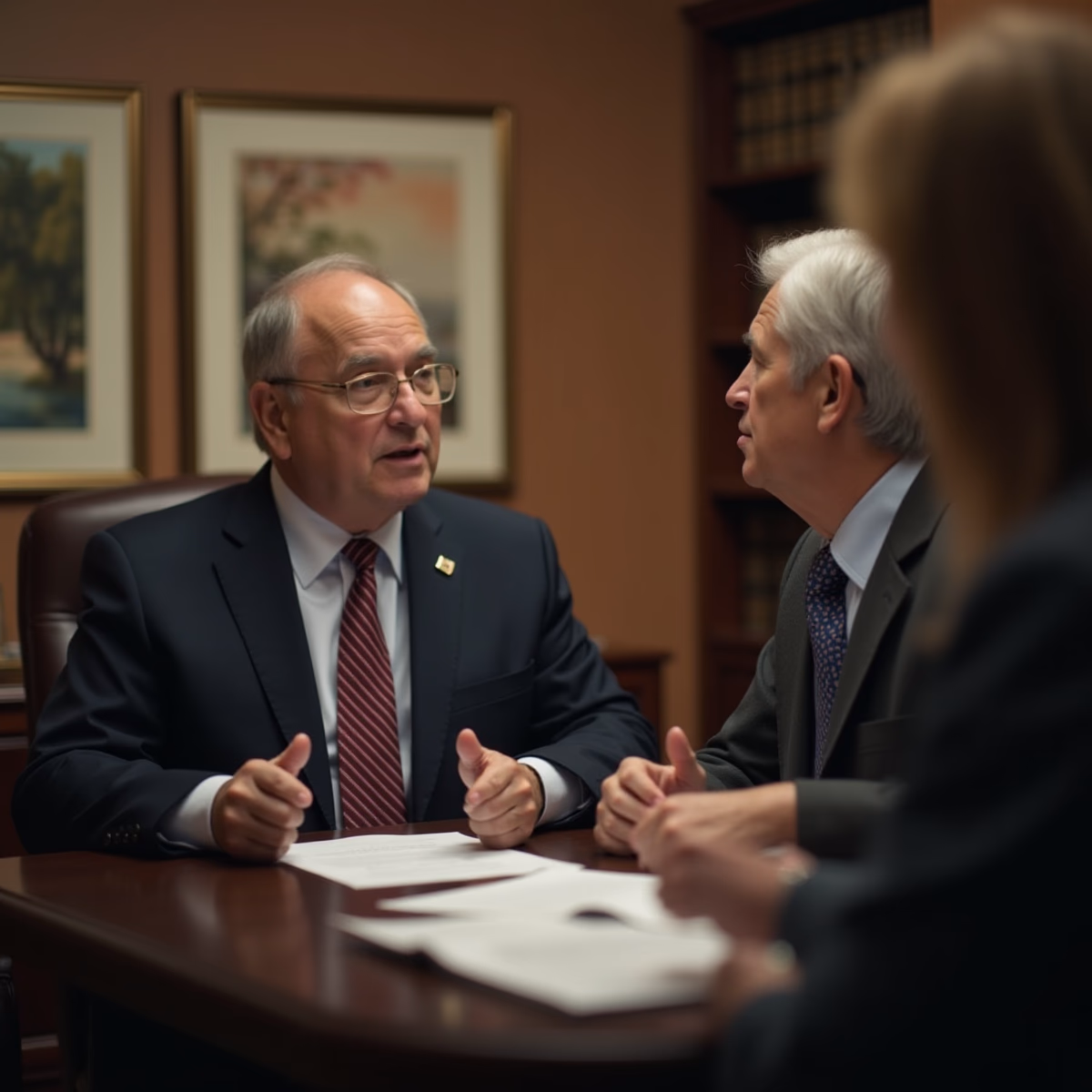
California probate is designed to provide court-supervised transfer of property, yet cases often break down when authority is unclear, required steps are missed, or disputes arise over assets, notice, and fiduciary conduct. When the process is misunderstood, families can face avoidable delay, escalating conflict, and increased exposure to creditor issues, hearings, or litigation before the estate can close.
- Appearances: Prepare for the probate hearing.
- Rules: Follow strict probate procedure requirements.
- Tracking: Maintain case management logs.
Ultimately, the difference between a routine distribution and a protracted legal battle often comes down to preparation. By anticipating the demands of the Probate Code and addressing potential friction points with beneficiaries and creditors upfront, fiduciaries can navigate the system with greater confidence and lower liability.
Verified Authority on California Beneficiary Rights
-
Statutory Notification Window (The “120-Day Rule”): California Probate Code § 16061.7
This is the most critical statute for beneficiaries. Once a trustee serves this formal notice, you have exactly 120 days to file a contest. If you miss this deadline, you are generally forever barred from challenging the validity of the trust, regardless of the evidence you have. -
Right to Accounting & Information: California Probate Code § 16060 (Duty to Inform)
Trustees have a mandatory legal duty to keep beneficiaries “reasonably informed” about the trust and its administration. Under Probate Code § 16062, most trustees must provide a formal financial accounting at least once a year. If they refuse, the court can compel them to do so. -
Inheriting Real Estate (Prop 19): California State Board of Equalization (Prop 19)
Beneficiaries must understand that inheriting a home no longer guarantees low property taxes. Under Prop 19, to avoid reassessment to current market value, the child must make the home their primary residence within one year of the parent’s death. -
No-Contest Clause Enforceability: California Probate Code § 21311
Fear of disinheritance often stops beneficiaries from fighting for their rights. However, this statute clarifies that a No-Contest clause is only enforceable if the contest is brought without “probable cause.” If you have a reasonable basis for your claim, your inheritance is likely safe. -
Recovering Trust Assets (Heggstad): California Probate Code § 850 (Heggstad Petition)
If a beneficiary finds that a parent intended an asset to be in the trust but failed to sign the deed or change the account title, a Section 850 Petition allows the court to “transfer” that asset into the trust without a full probate proceeding. -
Removal of a Bad Trustee: California Probate Code § 15642
Beneficiaries have the right to petition for the removal of a trustee who is unfit. Grounds for removal include excessive compensation, inability to manage finances, or “excessive hostility” toward beneficiaries that interferes with the trust’s administration.
|
Attorney Advertising, Legal Disclosure & Authorship
ATTORNEY ADVERTISING.
This content is provided for general informational and educational purposes only and does not constitute legal, financial, or tax advice. Under the California Rules of Professional Conduct and State Bar advertising regulations, this material may be considered attorney advertising. Reading this content does not create an attorney-client relationship or any professional advisory relationship. Laws vary by jurisdiction and are subject to change, including recent 2026 developments under California’s AB 2016 and evolving federal estate and reporting requirements. You should consult a qualified attorney or advisor regarding your specific circumstances before taking action.
Responsible Attorney:
Steven F. Bliss, California Attorney (Bar No. 147856).
Local Office:
Corona Probate Law765 N Main St 124 Corona, CA 92878 (951) 582-3800
Corona Probate Law is a practice location and trade name used by Steven F. Bliss, Esq., a California-licensed attorney.
About the Author & Legal Review Process
This article was researched and drafted by the Legal Editorial Team of the Law Firm of Steven F. Bliss, Esq.,
a collective of attorneys, legal writers, and paralegals dedicated to translating complex legal concepts into clear, accurate guidance.
Legal Review:
This content was reviewed and approved by Steven F. Bliss, a California-licensed attorney (Bar No. 147856). Mr. Bliss concentrates his practice in estate planning and estate administration, advising clients on proactive planning strategies and representing fiduciaries in probate and trust administration proceedings when formal court involvement becomes necessary.
With more than 35 years of experience in California estate planning and estate administration,
Mr. Bliss focuses on structuring enforceable estate plans, guiding fiduciaries through court-supervised proceedings, resolving creditor and notice issues, and coordinating asset management to support compliant, timely distributions and reduce fiduciary risk. |