|
Legal & Tax Disclosure
ATTORNEY ADVERTISING.
This article is provided for general informational purposes only and does not constitute legal, financial, or tax advice. Reading this content does not create an attorney-client or professional advisory relationship. Laws vary by jurisdiction and are subject to change. You should consult a qualified professional regarding your specific circumstances. |
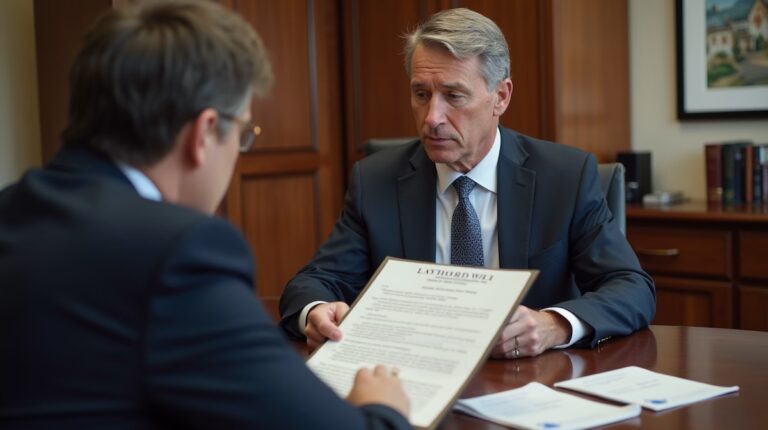
It started with a simple codicil, a handwritten amendment to Emily’s mother’s trust. Emily thought it clarified who received the vintage jewelry collection—a collection Emily had always admired. But then David, her brother, contested the codicil, claiming their mother lacked the capacity to sign it. He argued Emily unduly influenced her. What began as a clarification spiraled into a full-blown trust litigation, and now Emily is facing the very real possibility of losing not only the jewelry but also the legal fees draining her savings. And David’s attorney just filed a motion seeking to sell a beachfront property, a key asset of the trust, to “cover costs.” Emily is terrified—a forced sale now would be catastrophic.
As a Corona estate planning attorney and CPA with over 35 years of experience, I’ve seen this scenario countless times. The question of selling trust assets during litigation is complex, heavily dependent on California law, and requires a strategic response. It’s not a simple ‘yes’ or ‘no’ answer, and often hinges on the specific facts of the case, the nature of the dispute, and the judge’s discretion.
What Powers Does a Trustee Have During Litigation?
A trustee’s primary duty is to preserve the trust assets for the beneficiaries. However, litigation introduces a wrinkle. While the trustee must protect the estate, they also have a responsibility to defend the trust, which incurs costs. The trustee has broad authority to manage trust assets under Probate Code § 16000 et seq., but that authority is often curtailed during active litigation.
Generally, a trustee can continue ordinary course management of the assets – routine maintenance, investment of funds within existing parameters, etc. However, major actions like selling real estate, liquidating significant investments, or fundamentally altering the trust’s holdings require court approval, especially if the litigation is focused on the trustee’s actions. A motion to sell will almost always be required.
What Do Courts Consider When Deciding to Allow a Sale?
When faced with a motion to sell trust assets, the court balances several factors. Foremost is the necessity of the sale. Is it genuinely needed to fund the litigation, or is it a tactic to pressure beneficiaries? The court will scrutinize the costs involved – legal fees, expert witness expenses, etc. – and assess whether they are reasonable.
A judge will also consider the impact of the sale on the beneficiaries. Selling a unique or sentimental asset at a potentially unfavorable time can be detrimental. Courts favor preserving assets whenever possible, but not at the expense of the trust’s ability to defend itself. Finally, the court will look at the potential prejudice to the parties involved. Would the sale create an irreparable harm, or can it be mitigated?
What if the Sale is to Cover Trustee Mismanagement?
If the litigation stems from alleged trustee misconduct – misappropriation of funds, breach of fiduciary duty – the situation changes dramatically. Under Probate Code § 16420, beneficiaries can petition for remedies like removal of the trustee and surcharge – requiring the trustee to personally repay any lost funds. In these cases, selling assets to recover misappropriated funds is often viewed favorably by the court. However, even then, the process must be transparent and subject to judicial oversight.
What About Digital Assets? Is a Sale Possible?
The increasing prevalence of digital assets – cryptocurrency, online accounts, intellectual property – adds another layer of complexity. Accessing and valuing these assets during litigation can be challenging. Without specific RUFADAA authority (Probate Code § 870), a trustee or beneficiary may be legally blocked from subpoenaing critical digital evidence (emails, DMs, cloud logs) needed to prove undue influence or incapacity. Determining if digital assets can be sold depends on the trust’s language, the nature of the dispute, and often requires forensic accounting.
What if the Dispute Involves a Home Not Formally Titled in the Trust?
This is increasingly common. For deaths on or after April 1, 2025, if the dispute involves a home valued up to $750,000 that isn’t titled in the trust, a ‘Petition for Succession’ under AB 2016 (Probate Code § 13151) may be a faster resolution than a full Heggstad trial. This “Petition” (Judge’s Order), NOT an “Affidavit,” allows for a simplified court process to establish ownership and potentially authorize a sale. In contrast, a Heggstad trial is far more complex and expensive.
The Importance of the § 16061.7 Notification
It’s crucial to remember that the clock is ticking. Once a trustee serves the mandatory § 16061.7 Notification, a strict 120-day clock begins; if a beneficiary fails to file a contest within this window, they are essentially barred from challenging the trust’s validity forever.
As an attorney and CPA, I emphasize the CPA advantage. The ability to accurately value assets – especially for step-up in basis and capital gains purposes – is critical during litigation. A proper valuation can minimize tax implications and maximize the trust’s recovery. Don’t let a forced sale jeopardize your financial future.
How do California trustee duties and funding rules shape the outcome for beneficiaries?

Success in trust administration depends on more than just the document; it requires active management of assets, precise accounting to beneficiaries, and careful navigation of tax rules. Whether dealing with a blended family or complex real estate, understanding the mechanics of trust law is the only way to ensure the grantor’s wishes survive scrutiny.
| Legal Foundation | Relevance |
|---|---|
| Law | Follow the legal framework of trusts. |
| Structure | Review revocable living trusts. |
| Parties | Identify trust roles. |
A stable trust administration relies on the trustee’s ability to balance investment duties, beneficiary communication, and tax compliance. When these elements are managed proactively, families can avoid the emotional and financial drain of litigation.
Verified Authority on California Trust Litigation & Disputes
-
The 120-Day Rule (Probate Code § 16061.7): California Probate Code § 16061.7
The most critical statute in trust litigation. It establishes the 120-day deadline for contesting a trust after the notification is mailed. Missing this deadline usually ends the case before it starts. -
Caregiver Presumption (Probate Code § 21380): California Probate Code § 21380
This statute protects seniors by presuming that gifts to care custodians are the result of fraud or undue influence. It is the primary weapon used to overturn “deathbed amendments” that favor a caregiver over family. -
No-Contest Clauses (Probate Code § 21311): California Probate Code § 21311
Defines the strict limits on enforcing penalty clauses. It explains that a beneficiary can only be disinherited for suing if they lacked “probable cause” to bring the lawsuit. -
Petition for Instructions (Probate Code § 17200): California Probate Code § 17200
The “gateway” statute for most trust litigation. It allows a trustee or beneficiary to petition the court for instructions regarding the internal affairs of the trust, from interpreting terms to removing a trustee. -
Asset Recovery “Backup” (AB 2016): California Probate Code § 13151 (Petition for Succession)
Effective April 1, 2025, this statute provides a streamlined path (Judge’s Order) to resolve disputes over ownership of a primary residence valued up to $750,000, often avoiding costly Heggstad litigation. -
Digital Discovery (RUFADAA): California Probate Code § 870 (RUFADAA)
Essential for modern litigation. This act governs who can access a decedent’s digital communications—often the “smoking gun” evidence in undue influence or capacity trials.
|
Attorney Advertising, Legal Disclosure & Authorship
ATTORNEY ADVERTISING.
This content is provided for general informational and educational purposes only and does not constitute legal, financial, or tax advice. Under the California Rules of Professional Conduct and State Bar advertising regulations, this material may be considered attorney advertising. Reading this content does not create an attorney-client relationship or any professional advisory relationship. Laws vary by jurisdiction and are subject to change, including recent 2026 developments under California’s AB 2016 and evolving federal estate and reporting requirements. You should consult a qualified attorney or advisor regarding your specific circumstances before taking action.
Responsible Attorney:
Steven F. Bliss, California Attorney (Bar No. 147856).
Local Office:
Corona Probate Law765 N Main St 124 Corona, CA 92878 (951) 582-3800
Corona Probate Law is a practice location and trade name used by Steven F. Bliss, Esq., a California-licensed attorney.
About the Author & Legal Review Process
This article was researched and drafted by the Legal Editorial Team of the Law Firm of Steven F. Bliss, Esq.,
a collective of attorneys, legal writers, and paralegals dedicated to translating complex legal concepts into clear, accurate guidance.
Legal Review:
This content was reviewed and approved by Steven F. Bliss, a California-licensed attorney (Bar No. 147856). Mr. Bliss concentrates his practice in estate planning and estate administration, advising clients on proactive planning strategies and representing fiduciaries in probate and trust administration proceedings when formal court involvement becomes necessary.
With more than 35 years of experience in California estate planning and estate administration,
Mr. Bliss focuses on structuring enforceable estate plans, guiding fiduciaries through court-supervised proceedings, resolving creditor and notice issues, and coordinating asset management to support compliant, timely distributions and reduce fiduciary risk. |