|
Legal & Tax Disclosure
ATTORNEY ADVERTISING.
This article is provided for general informational purposes only and does not constitute legal, financial, or tax advice. Reading this content does not create an attorney-client or professional advisory relationship. Laws vary by jurisdiction and are subject to change. You should consult a qualified professional regarding your specific circumstances. |
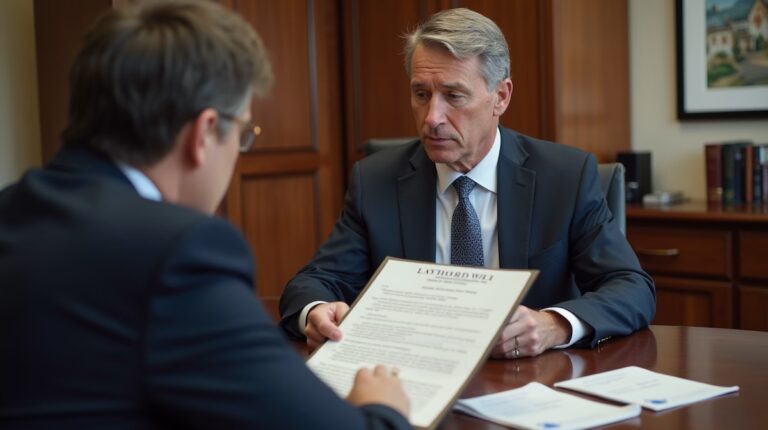
I’ve seen it happen too many times. David, a successful physician, spent months working with a prior attorney to create an irrevocable trust designed to protect his assets from potential medical malpractice claims. He meticulously transferred brokerage accounts, rental properties, and even a classic car collection. But he left out one crucial asset – his ownership stake in a limited liability company holding a medical practice. Years later, facing a significant lawsuit, David discovered the trust offered no protection for that LLC interest, representing a substantial portion of his net worth. The cost of that oversight? Potentially everything.
What Assets Present the Biggest Challenges for Irrevocable Trusts?

While irrevocable trusts are powerful tools for asset protection and estate planning, they aren’t a universal solution. Certain assets are either legally prohibited from being transferred, or the transfer creates unintended consequences that negate the benefits. As an Estate Planning Attorney and CPA with over 35 years of experience, I often advise clients that thoughtful planning requires understanding these limitations. My CPA background is invaluable because it allows me to proactively address the tax implications of these transfers, particularly the crucial ‘step-up in basis’ that can significantly impact capital gains for your heirs.
Can I Transfer My Home into an Irrevocable Trust?
This is a frequent question, and the answer is nuanced. Transferring a home into an irrevocable trust can be done, but it often triggers an immediate property tax reassessment under Prop 19 if the parents do not retain beneficial enjoyment or if the children do not make it their primary residence. This can result in significantly higher property taxes, offsetting any long-term asset protection benefits. We carefully analyze the property tax implications before recommending this strategy, and explore alternative options like retaining a life estate.
What About My Business Interests, Like an LLC?
Business interests require extra scrutiny. While you can transfer LLC membership interests into an irrevocable trust, it’s vital to consider the operating agreement and any restrictions on transferability. More recently, as of March 2025, domestic U.S. LLCs held in irrevocable trusts are exempt from mandatory BOI reporting; however, trustees managing foreign-registered entities must still file updates with FinCEN within 30 days. Beyond reporting requirements, transferring ownership can inadvertently trigger unintended consequences, like violating lender covenants or jeopardizing existing contracts. Thorough due diligence is essential.
Are There Assets That Are Simply Untransferable?
Certain assets are inherently non-transferable. For example, personal injury claims, future inheritance rights (the right to receive an inheritance, not an asset you already own), and certain government benefits (like Social Security) cannot be assigned or transferred into a trust. Attempting to do so would be considered a fraudulent transfer and would be legally invalid.
What Happens if I Miss an Asset? Can It Still Be Protected?
This is where careful estate planning becomes crucial. It’s surprisingly common for clients to overlook assets, particularly smaller accounts or digital assets. If an asset intended for the trust is accidentally left out, and it’s valued up to $750,000, for deaths on or after April 1, 2025, it qualifies for a ‘Petition for Succession’ under AB 2016 (Probate Code § 13151). This allows a court to legally transfer the asset into the trust after death. It’s important to refer to this as a “Petition” (Judge’s Order), NOT an “Affidavit.” However, assets exceeding that amount would likely require a more complex and potentially costly probate proceeding.
What About Assets Subject to Creditor Claims?
Placing assets already subject to a valid creditor claim into an irrevocable trust won’t shield them. The transfer will likely be deemed a fraudulent conveyance, and the creditor can still pursue those assets. To shield assets from future creditors (including divorce settlements), the trust must include a valid Spendthrift Clause under Probate Code § 15300, which legally prevents creditors from attaching the assets before they are distributed.
How Do I Modify or Terminate an Irrevocable Trust if My Circumstances Change?
Irrevocable doesn’t necessarily mean unmodifiable. Under Probate Code § 15403, an irrevocable trust can be modified if all beneficiaries consent, provided the change doesn’t defeat a ‘material purpose’ of the trust. However, this requires full cooperation from all parties, which isn’t always feasible. Alternatively, under the California Uniform Trust Decanting Act (Probate Code § 19501), a trustee with expanded discretion may ‘pour’ assets from an old restrictive trust into a new, modern trust without court approval, often used to fix tax errors or update beneficiary terms.
Navigating these complexities requires an experienced attorney who understands both estate planning and tax implications. The potential benefits of an irrevocable trust are substantial, but only if implemented correctly.
What failures trigger court intervention and contests in California trust administration?
California trusts are designed to bypass probate and maintain privacy, yet they often fail when assets are not properly funded, trustee duties are ignored, or ambiguous terms trigger disputes. Even with a signed trust document, families can face court battles if the “operations manual” of the trust isn’t followed strictly under the Probate Code.
- Asset Protection: Explore permanent trust structures for asset shielding.
- Post-Death Creation: Understand testamentary trusts.
- Policy Management: Utilize an ILIT strategies for estate taxes.
Ultimately, the success of a trust depends on the details—proper funding, clear terms, and a trustee willing to follow the rules. By anticipating friction points and documenting every step of the administration, fiduciaries can protect the estate and themselves from liability.
Verified Authority on Irrevocable Trust Administration
-
Trust Decanting (Probate Code § 19501): California Uniform Trust Decanting Act
The modern statute allowing a trustee to “fix” a broken irrevocable trust. It permits moving assets into a new trust with better administrative terms or tax provisions without going to court. -
Medi-Cal Estate Recovery (Asset Test Elimination): California DHCS Medi-Cal Guidelines
Official guidance confirming the elimination of the asset test (effective Jan 1, 2024). While owning assets no longer disqualifies you from coverage, placing a primary residence into an Irrevocable Trust remains mandatory to protect the home from Medi-Cal Estate Recovery liens after death. -
Spendthrift Protection (Probate Code § 15300): California Probate Code § 15300
The legal shield that makes an irrevocable trust “irrevocable.” This statute validates clauses that prevent creditors, lawsuits, and ex-spouses from attaching trust assets before they reach the beneficiary. -
Estate Tax Exemption (OBBBA): IRS Estate Tax Guidelines
Reflects the OBBBA permanent increase to a $15 million per person exemption (effective Jan 1, 2026). This high threshold shifts the focus of most irrevocable trusts from tax savings to asset protection. -
Missed Asset Recovery (AB 2016): California Probate Code § 13151 (Petition for Succession)
If an asset was intended for the trust but legally left out, this statute (effective April 1, 2025) allows for a “Petition for Succession” for assets up to $750,000, bypassing full probate. -
Digital Asset Access (RUFADAA): California Probate Code § 870 (RUFADAA)
Mandatory for irrevocable trusts holding crypto or digital rights. Without specific RUFADAA language, a trustee may be legally blocked from accessing or managing these modern assets.
|
Attorney Advertising, Legal Disclosure & Authorship
ATTORNEY ADVERTISING.
This content is provided for general informational and educational purposes only and does not constitute legal, financial, or tax advice. Under the California Rules of Professional Conduct and State Bar advertising regulations, this material may be considered attorney advertising. Reading this content does not create an attorney-client relationship or any professional advisory relationship. Laws vary by jurisdiction and are subject to change, including recent 2026 developments under California’s AB 2016 and evolving federal estate and reporting requirements. You should consult a qualified attorney or advisor regarding your specific circumstances before taking action.
Responsible Attorney:
Steven F. Bliss, California Attorney (Bar No. 147856).
Local Office:
Corona Probate Law765 N Main St 124 Corona, CA 92878 (951) 582-3800
Corona Probate Law is a practice location and trade name used by Steven F. Bliss, Esq., a California-licensed attorney.
About the Author & Legal Review Process
This article was researched and drafted by the Legal Editorial Team of the Law Firm of Steven F. Bliss, Esq.,
a collective of attorneys, legal writers, and paralegals dedicated to translating complex legal concepts into clear, accurate guidance.
Legal Review:
This content was reviewed and approved by Steven F. Bliss, a California-licensed attorney (Bar No. 147856). Mr. Bliss concentrates his practice in estate planning and estate administration, advising clients on proactive planning strategies and representing fiduciaries in probate and trust administration proceedings when formal court involvement becomes necessary.
With more than 35 years of experience in California estate planning and estate administration,
Mr. Bliss focuses on structuring enforceable estate plans, guiding fiduciaries through court-supervised proceedings, resolving creditor and notice issues, and coordinating asset management to support compliant, timely distributions and reduce fiduciary risk. |