Legal & Tax Disclosure
ATTORNEY ADVERTISING. This article is provided for general informational purposes only and does not constitute legal, financial, or tax advice. Reading this content does not create an attorney-client or professional advisory relationship. Laws vary by jurisdiction and are subject to change. You should consult a qualified professional regarding your specific circumstances. |
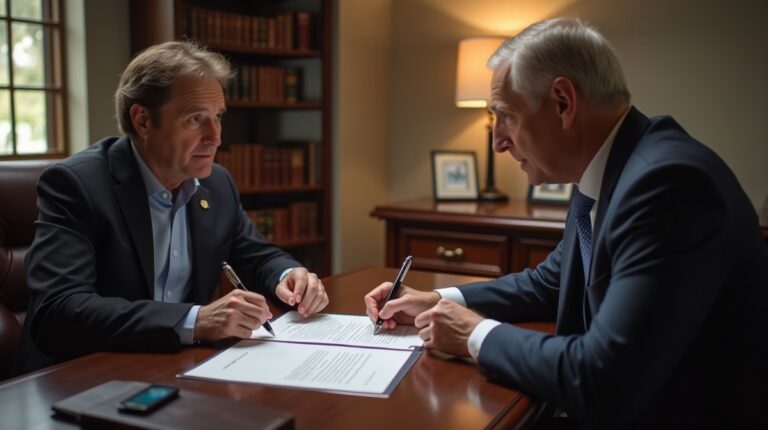
Emily just received a letter from the court confirming she’d been appointed Executor of her mother’s estate. She thought this meant the process would be straightforward. After all, her mom’s Will seemed clear enough. But when Emily tried to access her mother’s bank accounts, the bank demanded certified copies of the Will and a formal court order, called Letters Testamentary. Then came the notifications to creditors, the appraisal requirements, and the looming tax implications. Emily quickly realized the responsibility was far more complex – and stressful – than anticipated. Sadly, because she waited too long to seek legal guidance, Emily is now facing potential personal liability for errors in managing the estate.
As an Estate Planning Attorney & CPA with over 35 years of experience in California, I’ve seen countless situations like Emily’s unfold. The truth is, while probate isn’t always legally required, it’s rarely advisable to navigate alone. The costs of making a mistake – both financially and in terms of your time – are often far greater than the cost of professional representation.
What Exactly is Probate?
Probate is the court-supervised process of validating a Will, identifying and valuing assets, paying debts and taxes, and ultimately distributing the deceased’s property to their heirs. It’s designed to ensure fairness and transparency, but it comes with specific rules and procedures that can be challenging to understand and comply with.
What Happens if I Try to Handle Probate Myself?
Many people attempt to handle probate on their own, particularly if the estate seems small or uncomplicated. However, even seemingly simple estates can quickly become bogged down in complexities. Common pitfalls include:
- Incorrectly Valuing Assets: The Probate Referee charges a statutory fee of 0.1% of the assets appraised, and underreporting or miscalculating asset values can lead to penalties from the court or the California Franchise Tax Board.
- Missing Creditor Deadlines: Creditors have a strict window to file claims—typically 4 months after Letters are issued (Probate Code § 9100). If a creditor isn’t properly notified, their debt might be extinguished, even if it’s legitimate.
- Improper Asset Transfer: Transferring assets without following court procedures can create personal liability for the Executor.
- Failing to Account for Taxes: Failing to understand the step-up in basis and capital gains implications of inherited assets can result in significant unpaid taxes.
When is a Lawyer Absolutely Necessary?
While probate isn’t always legally required, several situations demand the assistance of an experienced attorney:
- Complex Estates: Estates with significant assets, multiple beneficiaries, or intricate family dynamics benefit greatly from professional guidance.
- Disputed Wills: If the validity of the Will is being challenged, legal representation is essential.
- Large Debts: Dealing with substantial creditor claims requires a thorough understanding of California debt law.
- Business Ownership: Transferring ownership of a business involves unique legal considerations.
What About the Cost of Probate?
One of the biggest concerns people have about probate is the cost. It’s true that probate can involve court fees, appraisal costs, and attorney’s fees. However, remember that California law sets a mandatory Statutory Fee Schedule based on the gross value of the estate (not the net equity) (Probate Code § 10800). For example, the fee is 4% of the first $100k, 3% of the next $100k, and 2% of the next $800k. As a CPA, I can help minimize these costs by accurately valuing assets and identifying potential tax deductions. Furthermore, as of April 1, 2025, formal probate is generally required if the gross value of the estate exceeds $208,850 (Probate Code § 13100). However, this calculation excludes assets held in trust, joint tenancy, or those with beneficiary designations (POD/TOD).
Full vs. Limited Authority for Executors?
Understanding the different levels of executor authority is also crucial. With Full Authority, an executor can sell real estate without a court hearing (Probate Code § 10400). With Limited Authority, the sale MUST be confirmed by the judge in an open court ‘overbid’ process, which adds significant time and expense. A lawyer can advise you on the best course of action based on your specific circumstances.
How Long Does Probate Take?
A probate case cannot be closed in less than roughly 7 to 9 months due to mandatory notice periods (15 days for initial hearing + 4 months for creditors), but most California probates in 2026 take 12 to 18 months due to court congestion. I’ve seen cases linger for years due to procedural errors or disputes.
In Emily’s case, a simple consultation with an attorney could have prevented the errors that led to potential liability. Don’t let the complexity of probate overwhelm you. Proactive legal guidance can save you time, money, and unnecessary stress during a difficult time.
What failures trigger contested proceedings and court intervention in California probate administration?

California probate is designed to provide court-supervised transfer of property, yet cases often break down when authority is unclear, required steps are missed, or disputes arise over assets, notice, and fiduciary conduct. When the process is misunderstood, families can face avoidable delay, escalating conflict, and increased exposure to creditor issues, hearings, or litigation before the estate can close.
| Final Stage | Consideration |
|---|---|
| Wrap Up | Execute end-stage probate steps. |
| IRS/FTB | Address probate tax implications. |
| Judgments | Review remedies and outcomes. |
California probate is most manageable when authority is documented early, assets are classified correctly, and procedure is followed consistently from petition through closing. When the process is approached with realistic expectations about notice, claims, accounting, and dispute risk, the estate is more likely to move toward closure without avoidable conflict or delay.
Verified Authority on California Probate Administration
-
Executor Powers (The IAEA): California Probate Code § 10400 (Independent Administration)
The Independent Administration of Estates Act (IAEA) is the engine of a modern probate. It allows personal representatives with “Full Authority” to sell real estate and pay bills without constant court approval. Without IAEA authority, every major action requires a separate court petition and order. -
Statutory Executor Fees: California Probate Code § 10800 (Compensation)
Executor fees in California are not arbitrary. They are calculated on the gross value of the probate estate: 4% of the first $100k, 3% of the next $100k, 2% of the next $800k, and 1% of the next $9 million. This often surprises heirs when the estate has high asset value but high debt (low equity). -
Creditor Claim Deadlines: California Probate Code § 9100 (Statute of Limitations)
The primary benefit of formal probate is the “clean break” from debts. Creditors generally have four months from the issuance of Letters to file a formal claim. If they miss this deadline, the debt is usually legally unenforceable against the estate or the heirs. -
Probate Value Threshold ($208,850): California Probate Code § 13100 (Small Estate Limit)
Effective April 1, 2025, estates valued under $208,850 may qualify for summary procedures (like a Small Estate Affidavit) instead of formal probate. Note that this limit is adjusted for inflation every three years. -
Mandatory Publication: California Probate Code § 8120 (Notice to Creditors)
Before the court can appoint an executor, a Notice of Petition to Administer Estate must be published in a newspaper of general circulation in the city where the decedent resided. This publication serves as constructive notice to unknown creditors and potential heirs. -
The Probate Referee: California Probate Code § 8900 (Appraisal)
You cannot simply guess the value of the estate’s assets. The court appoints a neutral Probate Referee to appraise all non-cash assets (real estate, stocks, business interests). Their appraisal is required before the estate can be distributed or closed.
Attorney Advertising, Legal Disclosure & Authorship
ATTORNEY ADVERTISING. This content is provided for general informational and educational purposes only and does not constitute legal, financial, or tax advice. Under the California Rules of Professional Conduct and State Bar advertising regulations, this material may be considered attorney advertising. Reading this content does not create an attorney-client relationship or any professional advisory relationship. Laws vary by jurisdiction and are subject to change, including recent 2026 developments under California’s AB 2016 and evolving federal estate and reporting requirements. You should consult a qualified attorney or advisor regarding your specific circumstances before taking action.
Responsible Attorney: Steven F. Bliss, California Attorney (Bar No. 147856).
Local Office:
Corona Probate Law765 N Main St 124 Corona, CA 92878 (951) 582-3800
Corona Probate Law is a practice location and trade name used by Steven F. Bliss, Esq., a California-licensed attorney.
About the Author & Legal Review Process
This article was researched and drafted by the Legal Editorial Team of the Law Firm of Steven F. Bliss, Esq., a collective of attorneys, legal writers, and paralegals dedicated to translating complex legal concepts into clear, accurate guidance.
Legal Review: This content was reviewed and approved by Steven F. Bliss, a California-licensed attorney (Bar No. 147856). Mr. Bliss concentrates his practice in estate planning and estate administration, advising clients on proactive planning strategies and representing fiduciaries in probate and trust administration proceedings when formal court involvement becomes necessary.
With more than 35 years of experience in California estate planning and estate administration, Mr. Bliss focuses on structuring enforceable estate plans, guiding fiduciaries through court-supervised proceedings, resolving creditor and notice issues, and coordinating asset management to support compliant, timely distributions and reduce fiduciary risk. |