
|
Legal & Tax Disclosure
ATTORNEY ADVERTISING.
This article is provided for general informational purposes only and does not constitute legal, financial, or tax advice. Reading this content does not create an attorney-client or professional advisory relationship. Laws vary by jurisdiction and are subject to change. You should consult a qualified professional regarding your specific circumstances. |
I recently received a frantic call from David, a successful software entrepreneur originally from Germany. He’d meticulously drafted a revocable living trust, believing he’d protected his family and assets. Unfortunately, he’d attempted to make a last-minute change – a codicil – naming a new beneficiary. But the codicil wasn’t properly witnessed, rendering it invalid. The result? Over $300,000 in probate costs and a protracted legal battle his family simply couldn’t afford. David’s story isn’t unique; a flawed or improperly executed estate plan can erase decades of hard work in an instant.
What Happens to My Trust if I’m Not a U.S. Citizen?
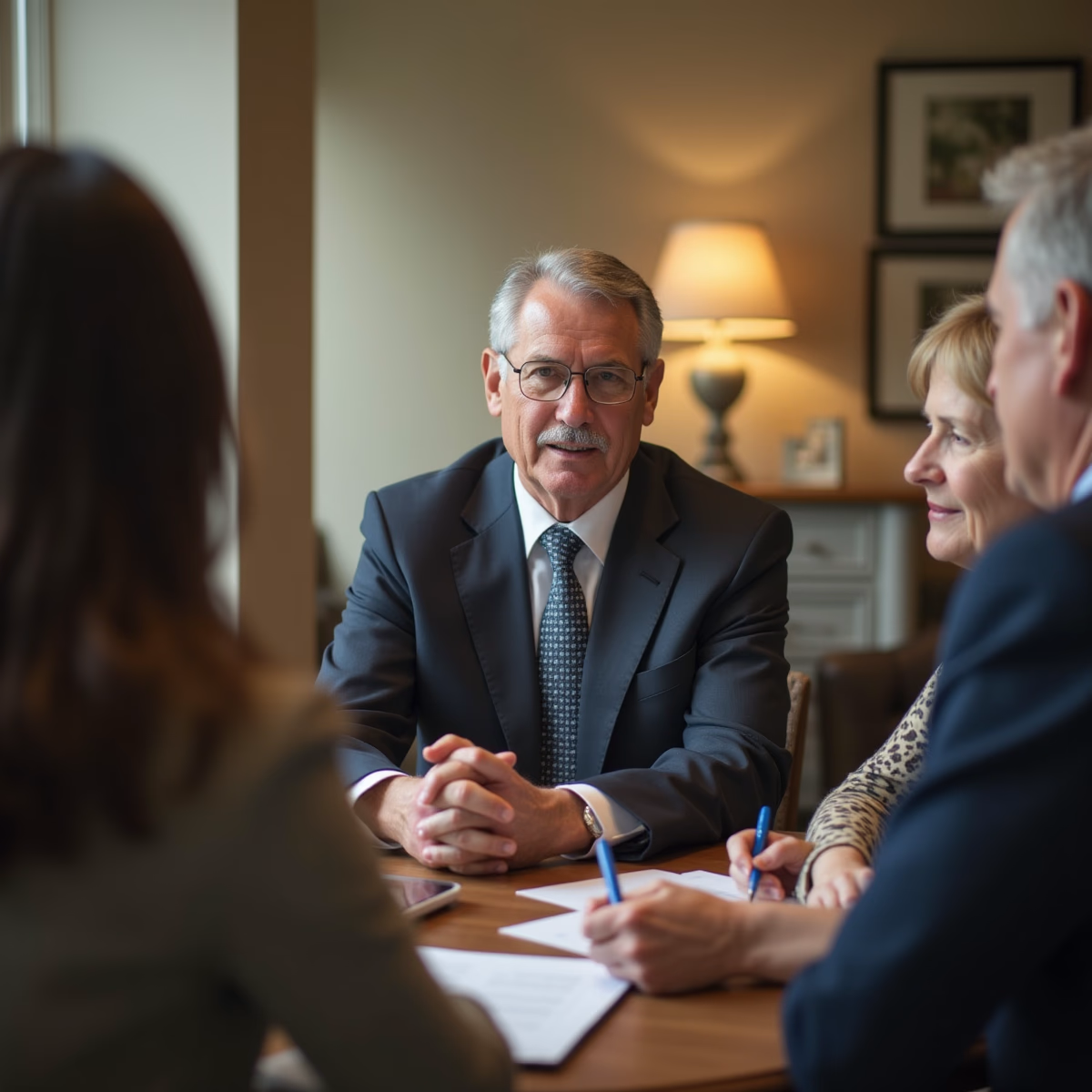
As an estate planning attorney and CPA with over 35 years of experience here in Corona, California, I frequently work with non-citizen clients. They often express concerns about whether a U.S.-based trust will be valid or recognized in their home country, or if their status impacts their ability to create and fund a trust effectively. The good news is that U.S. trusts are generally valid for non-citizens, but understanding the nuances is crucial. Your citizenship status doesn’t inherently disqualify you from establishing a trust to manage and distribute your assets, but it does introduce considerations that require specialized expertise.
Can a Non-Citizen Create a Valid Living Trust in California?
Absolutely. California law doesn’t discriminate based on citizenship when it comes to trust creation. However, the key lies in proper execution and funding. Signing the trust document itself isn’t enough. Under California Probate Code § 15200, a trust is not valid unless it holds identifiable property; signing the trust document is only step one—you must legally transfer assets (funding) to the trustee for the trust to exist. This can be more complex for non-citizens with assets held internationally, requiring careful coordination with legal professionals in multiple jurisdictions.
How Does Trust Revocability Work for Non-Residents?
Most California trusts are revocable, meaning you retain the right to amend or terminate them during your lifetime. Unless the trust instrument expressly states otherwise, Probate Code § 15400 presumes that all California trusts are revocable by the settlor, allowing you to amend, revoke, or restate the trust at any time while you have capacity. This is particularly important for non-residents who may want to adjust their estate plan based on changing circumstances in their home country or due to shifts in international tax laws. Regular reviews – at least every three to five years – are essential to ensure your trust remains aligned with your goals.
What About Real Estate Held in Both the U.S. and Abroad?
Real estate is often a significant part of an estate, and proper titling is vital. While transferring your home into your revocable trust does not trigger reassessment, the eventual distribution to your children will trigger a Prop 19 reassessment to current market value unless the child moves in as their primary residence within one year. This applies equally to U.S. and foreign properties. We frequently use separate trusts for foreign real estate, allowing for more streamlined administration under the laws of that jurisdiction. Failing to do so can create significant administrative hurdles and unexpected tax implications.
What Happens If I Forget to Transfer an Asset into My Trust?
It happens more often than you might think! Clients sometimes overlook accounts or investments. For deaths on or after April 1, 2025, if a primary residence intended for the trust was accidentally left out (valued up to $750,000), it qualifies for a ‘Petition for Succession’ under AB 2016 (Probate Code § 13151). It’s crucial to understand the difference: this is a “Petition” (Judge’s Order), NOT an “Affidavit.” The Small Estate Affidavit has a much lower threshold and may not be sufficient for larger assets. A well-drafted “safety net” provision in your trust, outlining this process, can save your heirs considerable time and expense.
How Does the New Estate Tax Law Affect Non-Citizen Grantors?
Effective Jan 1, 2026, the OBBBA permanently set the Federal Estate Tax Exemption to $15 million per person, meaning the primary focus of most Living Trusts is now avoiding probate and protecting privacy, rather than minimizing federal taxes. This change simplifies estate planning for many, including non-citizens. However, it’s important to remember that your home country may have its own estate or inheritance taxes, and we need to coordinate with international tax advisors to ensure compliance.
What About My Foreign Business Interests?
As of March 2025, domestic U.S. LLCs held in a living trust are exempt from mandatory BOI reporting; however, trustees managing foreign-registered entities must still file updates with FinCEN within 30 days. This is a complex area, and failing to comply can result in significant penalties. We work closely with accountants specializing in international business structures to ensure your trust is properly administered.
Protecting Your Digital Assets as a Non-Citizen
In today’s world, digital assets – online accounts, photos, cryptocurrency – are often significant. Without specific RUFADAA language (Probate Code § 870) in your trust, service providers like Apple, Google, and Coinbase can legally deny your successor trustee access to your digital photos, emails, and cryptocurrency. This is a critical oversight many clients make, and it’s especially problematic for non-citizens whose digital assets may be scattered across multiple platforms and jurisdictions.
My firm has spent the last 35+ years helping clients—both citizens and non-citizens—navigate these complex estate planning issues. As a CPA as well as an attorney, I can provide a unique perspective on minimizing tax liabilities, maximizing the step-up in basis for inherited assets, and ensuring your estate plan is globally compliant.
What determines whether a California trust settlement remains private or erupts into public litigation?
California trusts are designed to bypass probate and maintain privacy, yet they often fail when assets are not properly funded, trustee duties are ignored, or ambiguous terms trigger disputes. Even with a signed trust document, families can face court battles if the “operations manual” of the trust isn’t followed strictly under the Probate Code.
- Locking it Down: Explore irrevocable trusts for asset shielding.
- Post-Death Creation: Understand trusts created by will.
- Policy Management: Utilize an irrevocable life insurance trust for estate taxes.
A stable trust administration relies on the trustee’s ability to balance investment duties, beneficiary communication, and tax compliance. When these elements are managed proactively, families can avoid the emotional and financial drain of litigation.
Verified Authority on California Trust Law
-
Trust Validity (Probate Code § 15200): California Probate Code § 15200
The foundational statute confirming that a trust requires property to be valid. This is the legal basis for the “funding” requirement—without transferring assets (deeds, accounts) into the trust, the document is legally empty. -
Revocability Presumption (Probate Code § 15400): California Probate Code § 15400
Confirms that California trusts are presumed revocable unless stated otherwise. This grants the settlor the flexibility to change beneficiaries, trustees, or terms as life circumstances evolve. -
Primary Residence Succession (AB 2016): California Probate Code § 13151 (Petition for Succession)
Effective April 1, 2025, this statute acts as a backup for funding errors. If a home (up to $750,000) is left out of the trust, this Petition avoids a full probate administration. -
Property Tax Reassessment (Prop 19): California State Board of Equalization (Prop 19)
Essential for all trust creators. While the trust avoids probate, it does not automatically avoid property tax increases for heirs. Specific planning is required to navigate the “primary residence” requirement for children. -
Estate Tax Exemption (OBBBA): IRS Estate Tax Guidelines
Reflects the OBBBA permanent increase to a $15 million per person exemption (effective Jan 1, 2026). This shifts the planning focus for most Californians from tax avoidance to asset protection and probate avoidance. -
Digital Asset Access (RUFADAA): California Probate Code § 870 (RUFADAA)
Without this statutory authority included in your trust, your digital legacy (crypto, social media, cloud storage) may be permanently locked away from your family by service providers.
|
Attorney Advertising, Legal Disclosure & Authorship
ATTORNEY ADVERTISING.
This content is provided for general informational and educational purposes only and does not constitute legal, financial, or tax advice. Under the California Rules of Professional Conduct and State Bar advertising regulations, this material may be considered attorney advertising. Reading this content does not create an attorney-client relationship or any professional advisory relationship. Laws vary by jurisdiction and are subject to change, including recent 2026 developments under California’s AB 2016 and evolving federal estate and reporting requirements. You should consult a qualified attorney or advisor regarding your specific circumstances before taking action.
Responsible Attorney:
Steven F. Bliss, California Attorney (Bar No. 147856).
Local Office:
Corona Probate Law765 N Main St 124 Corona, CA 92878 (951) 582-3800
Corona Probate Law is a practice location and trade name used by Steven F. Bliss, Esq., a California-licensed attorney.
About the Author & Legal Review Process
This article was researched and drafted by the Legal Editorial Team of the Law Firm of Steven F. Bliss, Esq.,
a collective of attorneys, legal writers, and paralegals dedicated to translating complex legal concepts into clear, accurate guidance.
Legal Review:
This content was reviewed and approved by Steven F. Bliss, a California-licensed attorney (Bar No. 147856). Mr. Bliss concentrates his practice in estate planning and estate administration, advising clients on proactive planning strategies and representing fiduciaries in probate and trust administration proceedings when formal court involvement becomes necessary.
With more than 35 years of experience in California estate planning and estate administration,
Mr. Bliss focuses on structuring enforceable estate plans, guiding fiduciaries through court-supervised proceedings, resolving creditor and notice issues, and coordinating asset management to support compliant, timely distributions and reduce fiduciary risk. |