|
Legal & Tax Disclosure
ATTORNEY ADVERTISING.
This article is provided for general informational purposes only and does not constitute legal, financial, or tax advice. Reading this content does not create an attorney-client or professional advisory relationship. Laws vary by jurisdiction and are subject to change. You should consult a qualified professional regarding your specific circumstances. |
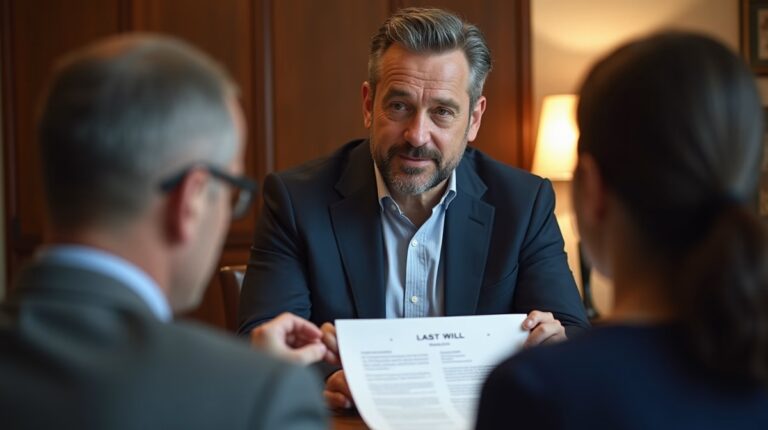
I recently met with Jennifer, a distraught woman whose elderly mother passed away without a will. The mother had meticulously prepared a signed and notarized codicil to her existing trust, changing beneficiaries. Unfortunately, Jennifer discovered the codicil was misplaced during the move to assisted living and could not be located. The lost codicil meant her mother’s clear intentions weren’t legally binding, and the estate, despite being relatively small, will now require a full probate proceeding, costing Jennifer upwards of $40,000 in legal fees and delaying access to desperately needed funds.
What happens if someone dies without a will or a valid codicil in California?

This is a surprisingly common scenario. While most people understand the importance of a will, many don’t realize the potential for alternative procedures to avoid the time, expense, and public record of formal probate. California offers several pathways, but their applicability depends heavily on the type and value of the assets owned. As an Estate Planning Attorney and CPA with over 35 years of experience, I’ve helped countless families navigate these situations. My accounting background gives me a unique advantage in understanding the tax implications – particularly the crucial step-up in basis for capital gains purposes – that often get overlooked.
Can I use a Small Estate Affidavit if my loved one died without a will?
For smaller estates, the process can be remarkably streamlined. For deaths occurring on or after April 1, 2025, the gross value threshold for using a Small Estate Affidavit (Probate Code § 13100) has increased to $208,850. This procedure allows successors to collect personal property without court involvement. However, this total MUST NOT include assets held in joint tenancy, trust, or those with named beneficiaries (POD/TOD), but MUST include the value of any real property unless that property is handled via a separate summary procedure.
What if the primary residence is the most valuable asset?
Many clients are relieved to learn that a primary residence can often bypass full probate. Under AB 2016 (Probate Code § 13151), a primary residence valued up to $750,000 qualifies for a ‘Petition for Succession’ rather than full probate administration. This is a court-filed Petition requiring a hearing and a Judge’s Order, though it is significantly faster than full probate. It’s crucial to distinguish this from the Section 13100 affidavit, which is a simpler, administrative process. The Petition for Succession allows for transfer of a larger asset than the affidavit.
What about vacant land or a timeshare?
Smaller interests in real property also have options. For real property interests valued at less than $69,625 (the 2025/2026 adjusted limit), successors can file an affidavit with the Court Clerk and record a certified copy with the County Recorder, completely bypassing the need for a hearing. This is especially useful for things like timeshares or small parcels of vacant land.
What if everything was jointly owned with a spouse?
This simplifies things considerably. This option allows for the transfer of unlimited assets to a surviving spouse without full probate administration, regardless of the estate’s value. It is strictly for assets passing to a spouse/domestic partner and requires the property be characterized as community property or quasi-community property.
My mother had a trust, but a bank account was accidentally left out – what can I do?
This “oops” factor is more common than you might think. If a decedent intended an asset to be in their trust (e.g., listed on Schedule A) but failed to retitle it, a Section 850 Petition can obtain a court order confirming the asset as trust property. This ‘cures’ the title defect and avoids a full probate estate for that single asset. It’s a relatively inexpensive procedure and can save a great deal of time and trouble.
Are Transfer on Death Deeds a viable alternative?
A Revocable Transfer on Death Deed is a valid alternative to probate for residential property, but it MUST be recorded within 60 days of notarization to be valid. Furthermore, beneficiaries assume liability for the decedent’s debts up to the value of the property for 3 years after death. This liability aspect is often overlooked, so careful consideration is required.
How are vehicles and vessels handled?
Vehicles and vessels may be transferred outside of probate using the Affidavit for Transfer Without Probate (REG 5). The value of the vehicle is excluded from the $208,850 small estate calculation, meaning a high-value car does not disqualify an estate from using summary procedures.
What causes California probate cases to spiral into delay, disputes, and extra cost?
California probate is designed to provide court-supervised transfer of property, yet cases often break down when authority is unclear, required steps are missed, or disputes arise over assets, notice, and fiduciary conduct. When the process is misunderstood, families can face avoidable delay, escalating conflict, and increased exposure to creditor issues, hearings, or litigation before the estate can close.
- Choices: Explore ways to avoid probate.
- Nuance: Check specific considerations.
- Administration: Manage administering a probate estate.
Ultimately, the difference between a routine distribution and a protracted legal battle often comes down to preparation. By anticipating the demands of the Probate Code and addressing potential friction points with beneficiaries and creditors upfront, fiduciaries can navigate the system with greater confidence and lower liability.
Verified Authority on California Probate Alternatives
-
Personal Property Affidavit ($208,850 Limit): California Probate Code § 13100 (Small Estate Affidavit)
For deaths on or after April 1, 2025, the gross value threshold for using a Small Estate Affidavit has increased to $208,850. This procedure allows successors to collect cash, stocks, and personal items without court involvement. Warning: This total MUST NOT include assets held in joint tenancy, trust, or those with named beneficiaries (POD/TOD), but MUST include the value of real property unless handled via a separate summary procedure. -
Primary Residence Succession (AB 2016): California Probate Code § 13151 (Petition for Succession)
You must distinguish between the Affidavit for Real Property of Small Value (strictly for property <$69,625) and AB 2016. Under AB 2016, a primary residence valued up to $750,000 qualifies for a ‘Petition for Succession’ rather than full probate. This is a court-filed Petition requiring a Judge’s Order, though it is significantly faster than full administration. -
Spousal Property Petition (Unlimited): California Probate Code § 13650 (Spousal Transfers)
This powerful alternative allows for the transfer of unlimited assets to a surviving spouse or domestic partner without full probate administration, regardless of the estate’s value. It is strictly for assets passing to a spouse and requires the property be characterized as community property or quasi-community property. -
Trust Assets & The “Heggstad” Petition: California Probate Code § 850 (Heggstad Petition)
If a decedent intended an asset to be in their trust (e.g., listed on Schedule A) but failed to retitle it (the “Oops” factor), a Section 850 Petition can obtain a court order confirming the asset as trust property. This “cures” the title defect and avoids opening a full probate estate for that single asset. -
Vacant Land & Timeshares: California Probate Code § 13200 (Real Property of Small Value)
For real property interests valued at less than $69,625 (the 2025/2026 adjusted limit), successors can file an Affidavit for Real Property of Small Value with the Court Clerk and record a certified copy with the County Recorder. This completely bypasses the need for a hearing or judge’s order. -
Vehicle & Vessel Transfers (DMV): DMV Form REG 5 (Affidavit for Transfer Without Probate)
Vehicles and vessels may be transferred outside of probate using the Affidavit for Transfer Without Probate (REG 5). Critically, the value of the vehicle is excluded from the $208,850 small estate calculation, meaning a high-value car does not disqualify an estate from using summary procedures. -
Digital Asset Access (RUFADAA): California Probate Code § 870 (RUFADAA)
Even in summary administration, digital assets can be locked. Without specific RUFADAA language (Probate Code § 870) in your Will or Trust, service providers like Coinbase and Google can legally deny successors access to digital wallets and accounts, forcing a full probate just to retrieve them.
|
Attorney Advertising, Legal Disclosure & Authorship
ATTORNEY ADVERTISING.
This content is provided for general informational and educational purposes only and does not constitute legal, financial, or tax advice. Under the California Rules of Professional Conduct and State Bar advertising regulations, this material may be considered attorney advertising. Reading this content does not create an attorney-client relationship or any professional advisory relationship. Laws vary by jurisdiction and are subject to change, including recent 2026 developments under California’s AB 2016 and evolving federal estate and reporting requirements. You should consult a qualified attorney or advisor regarding your specific circumstances before taking action.
Responsible Attorney:
Steven F. Bliss, California Attorney (Bar No. 147856).
Local Office:
Corona Probate Law765 N Main St 124 Corona, CA 92878 (951) 582-3800
Corona Probate Law is a practice location and trade name used by Steven F. Bliss, Esq., a California-licensed attorney.
About the Author & Legal Review Process
This article was researched and drafted by the Legal Editorial Team of the Law Firm of Steven F. Bliss, Esq.,
a collective of attorneys, legal writers, and paralegals dedicated to translating complex legal concepts into clear, accurate guidance.
Legal Review:
This content was reviewed and approved by Steven F. Bliss, a California-licensed attorney (Bar No. 147856). Mr. Bliss concentrates his practice in estate planning and estate administration, advising clients on proactive planning strategies and representing fiduciaries in probate and trust administration proceedings when formal court involvement becomes necessary.
With more than 35 years of experience in California estate planning and estate administration,
Mr. Bliss focuses on structuring enforceable estate plans, guiding fiduciaries through court-supervised proceedings, resolving creditor and notice issues, and coordinating asset management to support compliant, timely distributions and reduce fiduciary risk. |