This article is provided for general informational purposes only and does not constitute legal, financial, or tax advice.
Reading this content does not create an attorney-client or professional advisory relationship.
Laws vary by jurisdiction and are subject to change. You should consult a qualified professional regarding your specific circumstances.
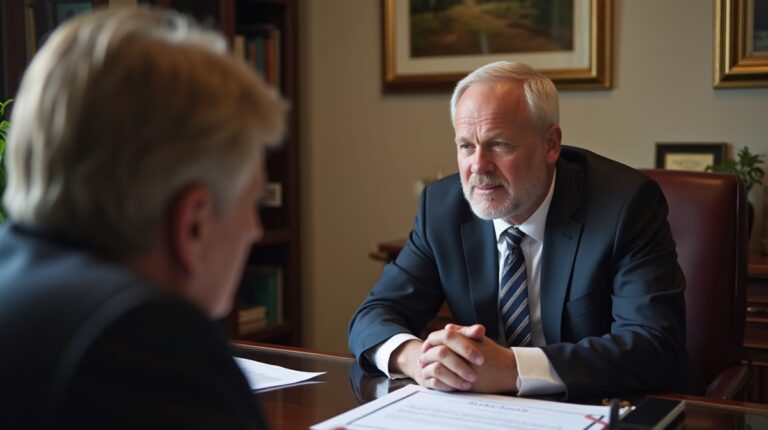
Emily received the devastating news just last week: her husband, David, unexpectedly passed away. Beyond the grief, she’s facing a mountain of paperwork and the daunting prospect of probate, potentially costing her $30,000 or more in legal fees and delaying access to assets she desperately needs to maintain their household. She’s terrified of losing the financial security they worked a lifetime to build.
As an Estate Planning Attorney and CPA with over 35 years of experience, I’ve seen this scenario play out countless times. The good news is, California law provides a remarkably efficient pathway for surviving spouses – a “fast track” probate that can sidestep many of the usual delays and expenses.
What Exactly Is This “Fast Track” Probate?
This streamlined process is known as the Spousal Property Petition, detailed in Probate Code § 13650. Essentially, it allows for the transfer of unlimited assets to a surviving spouse without the four-month creditor period that typically applies in full probate. This means Emily, or any surviving spouse, can quickly access funds to pay bills, maintain the home, and continue her life without financial hardship.
How Does It Differ from Traditional Probate?
Traditional probate can be a lengthy and complex undertaking. It involves a court-supervised inventory of all assets, payment of debts and taxes, and final distribution to heirs. This can easily take six months to a year, and as Emily fears, can generate significant legal fees. The Spousal Property Petition eliminates much of this. There’s typically only one court hearing required. Critically, because there’s no creditor period, assets aren’t tied up for months while potential claims are evaluated.
What Assets Qualify for This Streamlined Process?
Almost anything. Real estate, bank accounts, stocks, bonds – all can be transferred directly to the surviving spouse. However, it’s vital to understand this isn’t a complete bypass of the probate system if other heirs exist. This petition specifically focuses on transferring assets to the spouse. Any remaining assets will still need to be addressed under a standard probate or trust administration, if applicable.
What Documentation Is Required?
The petition requires a certified copy of the death certificate, the original will (if one exists), and a detailed schedule of assets. Accuracy is paramount, so a meticulous inventory is essential. Often, a declaration under penalty of perjury attesting to the assets and the marital relationship is sufficient.
The CPA Advantage: Stepping Up the Basis
As a CPA as well as an attorney, I bring a unique perspective. Transferring assets to a surviving spouse doesn’t just avoid probate costs; it also creates a significant tax benefit: a “step-up” in basis. This means the surviving spouse inherits the assets at their current fair market value, eliminating capital gains taxes on any appreciation that occurred during the decedent’s lifetime. For example, if David purchased stock for $10,000 years ago, and it’s now worth $50,000, Emily will only pay capital gains tax on any appreciation after she inherits it. Proper valuation is crucial here, and that’s where my CPA expertise comes into play.
What Happens If There’s No Will?
Even without a will, a surviving spouse can utilize this process. The court will determine the community property (assets acquired during the marriage) and the surviving spouse’s share of the separate property. The petition then facilitates the transfer of those assets.
What If the Situation Is Complicated?
While incredibly efficient, the Spousal Property Petition isn’t a one-size-fits-all solution. If there are disputes among heirs, challenges to the will, or complex asset holdings, a more traditional probate may be necessary. It’s important to have a thorough legal evaluation to determine the best course of action.
What causes California probate cases to spiral into delay, disputes, and extra cost?

Success in probate court depends less on the size of the estate and more on the accuracy of the petition and the behavior of the fiduciary. Whether the issue is a forgotten asset, a contested creditor claim, or a disagreement among siblings, understanding the procedural triggers for court intervention is the best defense against prolonged administration.
- Will-Based Power: Secure letters testamentary if a will exists.
- Administrator Authority: Obtain administrator authority letters if there is no will.
- Who is Involved: Clarify roles using key parties.
California probate is most manageable when authority is documented early, assets are classified correctly, and procedure is followed consistently from petition through closing. When the process is approached with realistic expectations about notice, claims, accounting, and dispute risk, the estate is more likely to move toward closure without avoidable conflict or delay.
Official 2026 California Probate Standards & Resources
-
Probate Process: California Courts – Probate Overview
This official judicial guide provides a high-level roadmap of the California probate system, defining the roles of executors and administrators while clarifying which assets are subject to court supervision and which bypass the process entirely. -
Unclaimed Property: California State Controller – Unclaimed Property
A vital resource for estate representatives to search the “Estates of Deceased Persons File,” which contains millions in forgotten bank accounts, uncashed checks, and insurance benefits that must be marshaled and reported as part of a complete estate inventory. -
Probate Code: Probate Code § 13100 (Small Estate Affidavit)
The primary statute governing the simplified collection of personal property; as of 2026, it allows successors to bypass probate for estates valued at $208,850 or less (for deaths after April 1, 2025), provided a 40-day waiting period has elapsed. -
Local Court Rules: Riverside Superior Court – Probate Division
Provides essential “Local Rules” and “Proposed Form Changes” effective January 1, 2026, including specific requirements for remote appearances and the mandatory use of the Riverside-specific e-filing system for all probate matters in the Inland Empire. -
Tax Guidelines: Franchise Tax Board – Estates and Trusts
The official California tax portal for fiduciaries, outlining the 2026 filing requirements for Form 541 (Fiduciary Income Tax Return) and explaining when real estate withholding (Form 593) is required for the sale of inherited property.
|
Attorney Advertising, Legal Disclosure & Authorship
ATTORNEY ADVERTISING.
This content is provided for general informational and educational purposes only and does not constitute legal, financial, or tax advice. Under the California Rules of Professional Conduct and State Bar advertising regulations, this material may be considered attorney advertising. Reading this content does not create an attorney-client relationship or any professional advisory relationship. Laws vary by jurisdiction and are subject to change, including recent 2026 developments under California’s AB 2016 and evolving federal estate and reporting requirements. You should consult a qualified attorney or advisor regarding your specific circumstances before taking action.
Responsible Attorney:
Steven F. Bliss, California Attorney (Bar No. 147856).
Local Office:
Corona Probate Law765 N Main St 124 Corona, CA 92878 (951) 582-3800
Corona Probate Law is a practice location and trade name used by Steven F. Bliss, Esq., a California-licensed attorney.
About the Author & Legal Review Process
This article was researched and drafted by the Legal Editorial Team of the Law Firm of Steven F. Bliss, Esq.,
a collective of attorneys, legal writers, and paralegals dedicated to translating complex legal concepts into clear, accurate guidance.
Legal Review:
This content was reviewed and approved by Steven F. Bliss, a California-licensed attorney (Bar No. 147856). Mr. Bliss concentrates his practice in estate planning and estate administration, advising clients on proactive planning strategies and representing fiduciaries in probate and trust administration proceedings when formal court involvement becomes necessary.
With more than 35 years of experience in California estate planning and estate administration,
Mr. Bliss focuses on structuring enforceable estate plans, guiding fiduciaries through court-supervised proceedings, resolving creditor and notice issues, and coordinating asset management to support compliant, timely distributions and reduce fiduciary risk. |